Author: Senior Pet Product Reviewer & Training Specialist
Updated: August 15, 2026
Quick Answer
How do you teach a stubborn dog to drop it? The most effective way is using the “Two-Toy Method.” Instead of taking an item away, offer a second, higher-value toy to initiate a trade. When the dog drops the first item to grab the second, clearly say the “Drop It” command, and instantly reward them with the new toy. Never chase your dog or force their mouth open, as this triggers resource guarding and turns training into a game of keep-away. Consistency and high-value rewards are the secrets to success.
Table of Contents
- Why Your Dog Refuses to “Drop It”
- Method 1: The “Two-Toy Trade”
- Method 2: The “High-Value Treat” Swap
- Essential Tool Solutions
- Frequently Asked Questions (FAQ)
- Key Takeaways
Why Your Dog Refuses to “Drop It” (The Psychology of a Stubborn Dog)
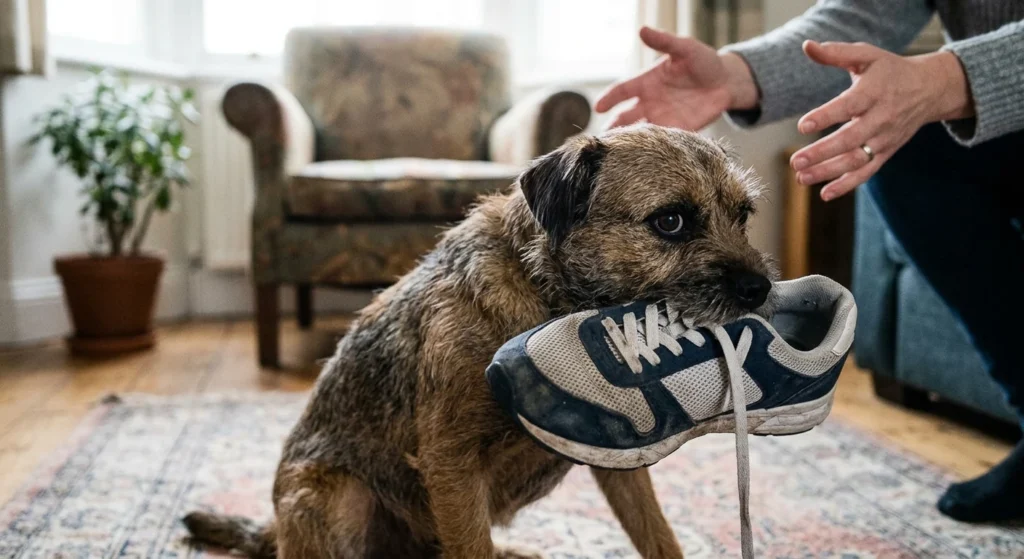
Over my last ten years of reviewing thousands of dog training products, testing countless tug toys, and working with every breed from hyperactive Terriers to incredibly stubborn Bulldogs, I’ve heard one complaint more than any other: “My dog simply refuses to let go.”
If you are reading this, you probably know the exact feeling of panic when you have to figure out what to do if a dog won’t drop a chicken bone they just found on the sidewalk. You reach for their mouth, they clamp down harder, and suddenly, you are in a wrestling match you never wanted to be in. But to truly master the drop it command, we first need to look at this from your dog’s perspective. They aren’t just trying to make your life difficult; they are following deeply ingrained biological instincts.
The “Keep-Away” Game and Resource Guarding
Dogs are opportunistic scavengers. In the wild, if a canine finds a high-value resource—whether that’s food or an interesting object—their instinct is to hold onto it. When you lunge toward your Golden Retriever who won’t drop the ball, you are inadvertently sending one of two signals:
- Signal 1: The Game is On. Many dogs interpret your sudden movement as an invitation to play chase. To a high-energy dog, running away while you frantically shout the drop it command is the most fun they’ve had all day.
- Signal 2: Threat to the Resource. For dogs prone to anxiety or possessiveness, your attempt to snatch the item confirms their worst fear: you are a thief. This directly leads to resource guarding, a behavioral issue where a dog will growl, snap, or aggressively protect their “prize.”
Expert Insight: According to the guidelines set forth by the American Veterinary Society of Animal Behavior (AVSAB), utilizing physical force, such as prying a dog’s mouth open, is highly discouraged. Not only does it damage the human-animal bond, but it also teaches the dog to swallow dangerous items faster next time to avoid having them confiscated.
Why Traditional “Force” Methods Fail with Stubborn Breeds
I remember testing a new line of durable chew toys a few years back with a notoriously stubborn rescue Pitbull mix. The owner had spent months trying to force the dog to release items by squeezing its jaw. The result? The dog developed a lightning-fast reflex to gulp down anything in its mouth the second a human hand approached. This is a terrifying scenario if you are trying to figure out how to make a dog drop something dangerous, like a battery or chocolate.
If you want to teach a stubborn dog to drop it, especially working breeds or terriers whose prey drive tells them to hold tight, you must change the paradigm. You have to stop acting like a “taker” and start acting like a “trader.” You need to convince your dog that giving up what they have in their mouth is the most rewarding decision they can possibly make in that moment.
Method 1: The “Two-Toy Trade” (The Core Technique)
If you’ve ever typed “two toy method for drop it command” into a search engine, you’re on the right track. In my decade of evaluating training protocols, this is unequivocally the most effective strategy for high-drive dogs. Whether you are figuring out how to make a bulldog drop a toy (notoriously strong jaws) or doing drop it training for terriers (who love to shake and hold their “prey”), this method works because it completely removes the conflict. You are no longer taking their prize away; you are offering them a better game.
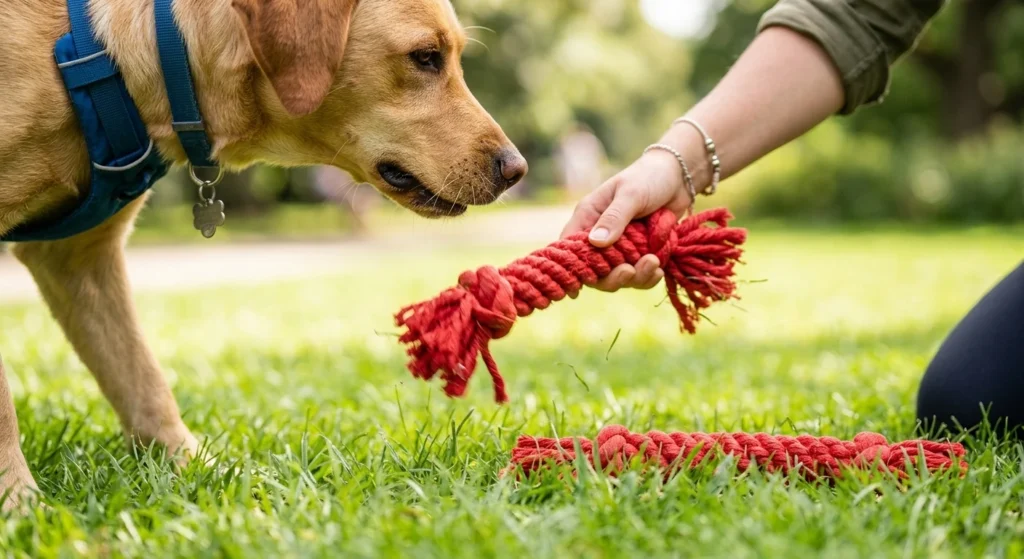
The core concept is simple: A “dead” toy (one lying still) is boring to a dog, while an “alive” toy (one moving in your hands) is irresistible.
- Step 1: The Preparation (Identical Value). You need two toys of equal, high value. I highly recommend using two identical long tug toys or two identical squeaky balls. If you use a ratty old rope for Toy A and a brand-new squeaky plush for Toy B, the dog will just drop A immediately, and you won’t get a proper training rep. The Kong toy drop it exchange game is a favorite of mine—using two identical Kong tugs.
- Step 2: The Engagement. Start a play session with Toy A. Let your dog bite it, tug it lightly, and enjoy the game. Keep Toy B hidden behind your back or tucked under your arm so they are solely focused on Toy A.
- Step 3: The “Dead” vs. “Alive” Trade. Stop moving Toy A entirely. Freeze your hands and let your arms go completely limp. Make Toy A “dead” and boring. At the exact same second, whip out Toy B. Make Toy B “alive.” Shake it, make happy noises, and drag it along the floor. Do not pull Toy A out of their mouth; just wait.
- Step 4: The Command (Timing is Everything). Because Toy B is now a moving target, your dog will naturally open their mouth to drop the boring Toy A and grab the exciting Toy B. The exact millisecond their jaws open and Toy A falls, say your drop it command clearly and cheerfully: “Drop It!”
- Step 5: The Reward. Immediately let them grab Toy B and play an intense, rewarding game of tug. You’ve just taught them that giving up a toy doesn’t end the fun—it actually restarts the fun! Pick up Toy A with your other hand, hide it, and prepare to repeat the process.
🐾 Reviewer’s Troubleshooting Tip:
What if my Golden Retriever won’t drop the ball even with a second ball? Retrievers are bred to hold things softly but persistently. If your dog tries to shove both toys in their mouth, you need to increase the distance. Toss Toy B a few feet away. The physical act of running to Toy B forces them to abandon Toy A.
Method 2: The “High-Value Treat” Swap
While the Two-Toy Method is brilliant for playtime, it doesn’t always translate to real-world emergencies. You won’t always have two identical toys when your dog picks up a rotting piece of food on a walk. This is where you need to know how to teach a dog to drop it with high value treats.
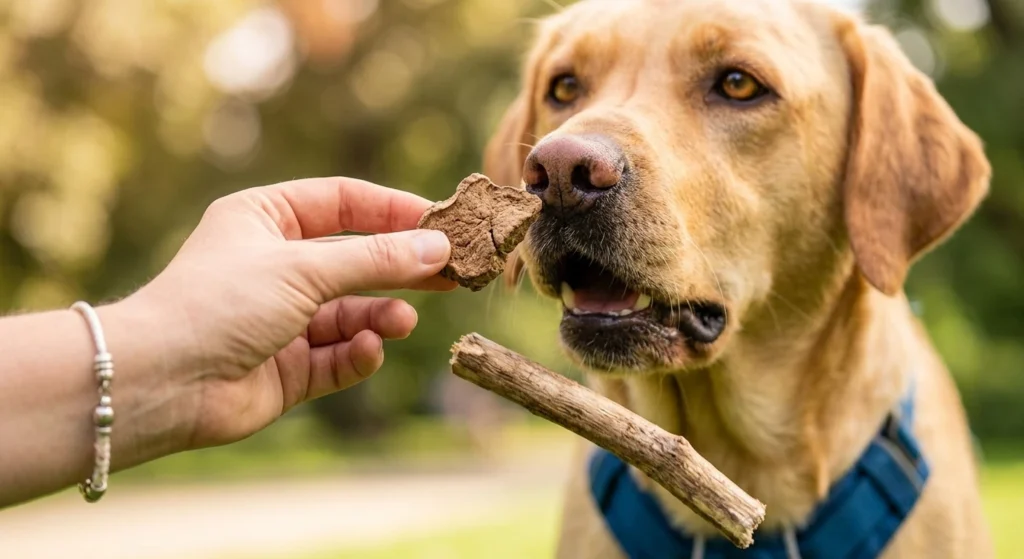
A lot of dog owners tell me this method failed for them. When I dig deeper, I ask, “What treat did you use?” Usually, the answer is standard dry kibble. Listen, your dog is not going to drop a stolen slice of pizza for a piece of dry kibble. You need a “Jackpot Reward.”
- Step 1: Selection of the “Jackpot”. Get the stinkiest, most delicious treat you can find. I’m talking about freeze-dried liver, boiled chicken breast, or small cubes of hot dog. These are your training currencies.
- Step 2: Start with Low-Value Items. Do not start this training when your dog has stolen your favorite shoe or a chicken bone. Start by giving them a boring, low-value item they don’t care much about—like a plain Nylabone or a dry stick. Let them hold it.
- Step 3: The Scent Swap. Take your jackpot treat and put it literally right on their nose. Dogs have incredibly powerful olfactory sensors. The smell of freeze-dried liver will short-circuit their brain’s focus on the boring stick. They cannot physically sniff and lick the treat while holding the stick, so instinct will take over.
- Step 4: The Release and Command. As the stick drops from their mouth to eat the treat, give the “Drop It” command. If you are using a training clicker for drop it command, click the exact moment the object hits the floor, then give the treat.
- Step 5: The “Anti-Theft” Association. Here is the secret sauce that 90% of owners miss: After you give them the treat, give the low-value item right back to them. Why? Because you are teaching them that “Drop It” does not mean “the human steals my stuff forever.” It means “the human pays me a tax in delicious meat, and I still get my toy back!” This builds massive trust and practically cures resource guarding over time.
Essential Tool Solutions: What You Need for Success
In my 10 years of reviewing pet gear, I’ve learned that the right tools make training 10x easier. You cannot execute the Two-Toy Method with a pair of flimsy dollar-store toys that your dog has zero interest in. If you want fast results, you need high-value gear. Here is my curated list of the best tug toys for drop it training and other essential solutions:
1. Knots Rope Tug Toys (The “Two-Toy” Essentials)
Why you need it: To make the Two-Toy Method work seamlessly, you need highly durable toys that can withstand energetic tugging. The FunnyFuzzy Knots Rope Tug Toy is perfect because the thick cotton rope is safe for your dog’s teeth, and the knotted design gives you a secure grip.
Pro Tip: Buy them in a 2-pack! Having two identical toys is the ultimate secret to getting your stubborn dog to drop the first one.
2. Soft Flannel Pet Mat (Protect Your Couch & Create a “Trade Zone”)
Why you need it: Dogs notorious for stealing socks or shoes often bolt straight to the couch to guard their “prize.” While you’re working on the “Drop It” command, it’s essential to protect your furniture from drool, dirt, and chewing. The FunnyFuzzy Flannel Pet Mat not only keeps your sofa safe but also acts as a designated, comfortable “Trade Zone” for your training sessions.
3. Squeaky Bone Plush Toy (The Auditory Jackpot)
Why you need it: If you prefer not to use food or treats, the best way to break a dog’s fixation on a forbidden item is an irresistible sound. The FunnyFuzzy Squeaky Bone Plush Toy instantly triggers their natural prey drive. The moment they hear that high-pitched squeak, they will instinctively drop whatever is in their mouth to investigate the noise.
Pro Tip: Keep this specific toy hidden! It must remain a “novelty item.” Only bring it out during “Drop It” training so the sound never loses its magic.
Frequently Asked Questions (FAQ)
Should you pry a dog’s mouth open to get something out?
Unless the item is an immediate choking hazard or severely toxic, no. Prying a dog’s mouth open destroys trust and often leads to the dog aggressively guarding items in the future. It also teaches them to swallow things faster the next time you approach. Always try trading for a higher-value item first.
Why does my dog run away when I say drop it?
Because they think you are initiating a game of “keep-away.” When you move toward them aggressively or shout, their instinct is to run and protect their prize. To fix this, stop moving, walk backward, or calmly offer a high-value trade.
What is the difference between “Drop It” and “Leave It”?
These are two entirely different commands. “Drop It” is reactive—you use it when the item is already in your dog’s mouth. “Leave It” is preventative—you use it to tell your dog to ignore an object before they pick it up. Once you master the drop, I highly recommend looking into how to teach a dog to leave it to stop the problem before it starts.
What to do if dog won’t drop a chicken bone?
In a high-stakes emergency like a chicken bone, use the “Treat Scatter” method. Take a massive handful of your high-value treats and aggressively toss them right at your dog’s nose/paws. The sudden explosion of amazing smells will often shock them into dropping the bone to vacuum up the treats. Once they drop it, put your foot over the bone, lead the dog away, and safely pick it up.
Key Takeaways for Dog Owners
- Trade, Don’t Take: Always approach training with a mindset of trading up. Offer a second toy or a high-value treat to make dropping the first item a rewarding experience, not a punishment.
- Timing is Crucial: Mark the behavior by saying “Drop It” the exact millisecond the dog opens its mouth to release the item, followed instantly by the reward.
- Manage Resource Guarding: Giving a low-value item back immediately after the dog drops it proves that you are not just a “thief,” which builds long-term trust and prevents resource guarding.
- Practice Daily in Safe Scenarios: Don’t wait for an emergency to use the command. Practice with the Two-Toy Method for 5 minutes a day during regular playtimes to build muscle memory.
Disclaimer: If your dog shows extreme aggression, growling, or snapping when holding items, please consult a certified veterinary behaviorist. Resource guarding can be dangerous if handled incorrectly.