Quick Answer
Most healthy dogs need a bath only when they are dirty, smelly, or their coat type requires it. Many dogs do well with occasional baths, while some non-shedding or high-maintenance coats may need grooming every six to eight weeks. Use dog shampoo, avoid over-bathing, and ask your veterinarian if your dog has itching, odor, redness, flakes, or recurring skin problems.
I write this kind of guide from a product tester’s perspective: the best pet product is not the one with the loudest packaging, but the one that solves a real household problem safely and repeatedly. For how often should you bathe a dog, that means combining reliable pet-care guidance with practical buying decisions a normal American household can actually follow.
Why Dog Bathing Advice Conflicts
Owners hear everything from weekly baths to never bathing unless the dog rolls in mud. The truth depends on coat, skin health, lifestyle, allergies, odor, season, and grooming routine.
Product marketing adds confusion. There are whitening shampoos, deodorizing shampoos, oatmeal shampoos, waterless sprays, conditioners, paw washes, wipes, and medicated products. Some are useful; some are unnecessary for many dogs.
A bath should solve a problem without creating another one. Too little grooming can leave dirt, odor, mats, and irritants. Too much bathing with the wrong product can dry skin or worsen irritation.
As a reviewer, I judge bathing tools by how they support comfort, rinsing, traction, drying, and coat maintenance. A good bath routine is calm, practical, and built around the dog’s actual coat.
The goal of this article is to give you a practical decision framework, not a pile of generic tips. A good pet guide should help you decide what matters first, what can wait, which products are actually useful, and when a veterinarian, trainer, groomer, or behavior professional should be involved.
Method 1: Choose a Bathing Schedule by Coat and Lifestyle
Instead of using one rule for every dog, decide based on what your dog’s skin and coat need.
Step 1: Start with the obvious trigger
Bathe when your dog is dirty, smells strongly, rolled in something, swam in irritating water, or has coat debris that brushing cannot remove.
Step 2: Consider coat type
Short-coated dogs may need fewer baths. Long, curly, or non-shedding coats may need more routine grooming to prevent mats.
Step 3: Account for lifestyle
Dogs that hike, swim, visit daycare, or play in mud may need more frequent cleaning than low-activity indoor dogs.
Step 4: Watch skin signals
Redness, flakes, greasy odor, hair loss, or constant scratching are not ordinary dirt. Ask a veterinarian before simply bathing more.
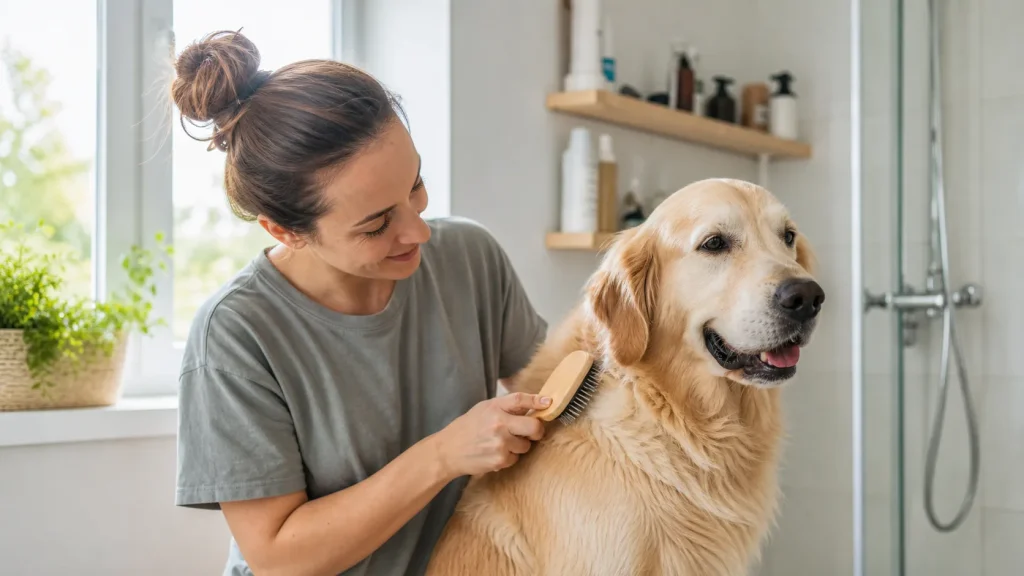
Step 5: Brush before the bath
Remove loose coat and tangles first. Water can tighten mats, making them harder and more painful to remove.
Step 6: Record what works
Note bath date, shampoo used, drying method, and skin response. This helps you find the right schedule.
Do not rush the setup phase. Whether you are buying gear, changing food, grooming, introducing pets, or preparing for emergencies, the cleanest results usually come from smaller steps done consistently. Big jumps create stress and make it harder to know what actually helped.
Method 2: Bathe Without Drying or Stressing Your Dog
Technique matters as much as frequency. A calm bath protects skin and reduces future resistance.
Step 1: Prepare everything first
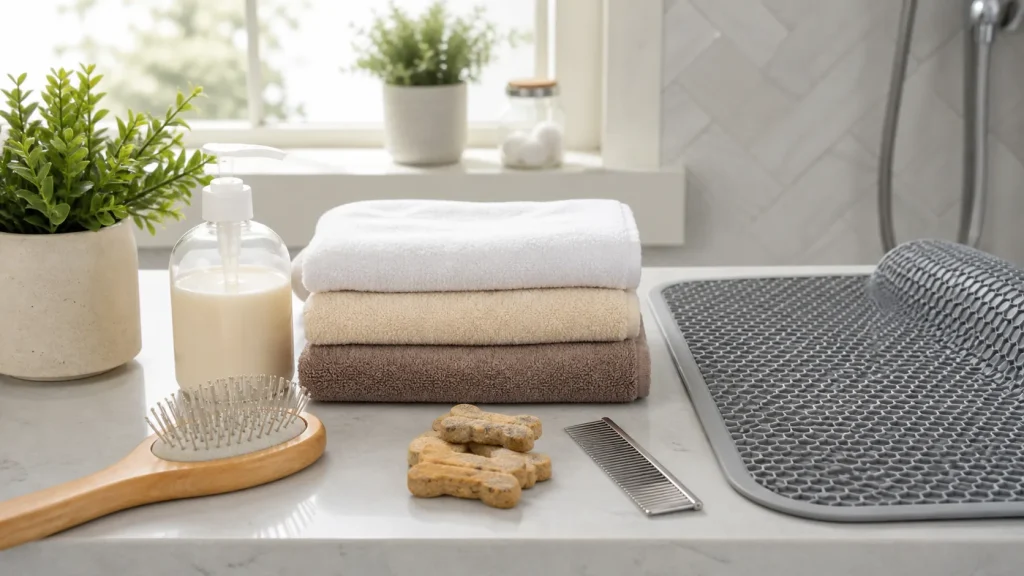
Have shampoo, towels, brush, non-slip mat, treats, cotton balls for visible outer-ear drying, and a cup or sprayer ready before the dog enters the tub.
Step 2: Use lukewarm water
Hot water can irritate skin, while cold water can make the bath stressful. Test temperature like you would for a child.
Step 3: Use dog-specific shampoo
Human shampoo is not ideal for dog skin. Choose a dog product and use medicated shampoo only as directed by a veterinarian.
Step 4: Rinse thoroughly
Leftover shampoo can cause itching. Rinse longer than you think, especially under the chest, armpits, belly, and tail.
Step 5: Dry by coat type
Towel drying may be enough for short coats. Thick or long coats may need careful blow drying on a safe, warm-not-hot setting.
Step 6: Reward calm behavior
Feed treats for stepping in, standing still, rinsing, and drying. Bathing is easier when the dog learns the routine is predictable.
Real-life pet care is rarely perfect. Your job is to create a repeatable system that reduces risk and makes good choices easier. If a method depends on perfect timing, unlimited money, or a pet who never gets stressed, it probably needs to be simplified.
Tool Solution: Products That Are Actually Useful
Pet products should make care safer, cleaner, easier, or more consistent. I judge them by fit, durability, ease of cleaning, safety, value, and whether they support humane handling. A product that looks impressive but creates stress or confusion is not a good solution.
Dog shampoo
Choose a gentle dog shampoo for routine baths. Medicated shampoos should match veterinary instructions.
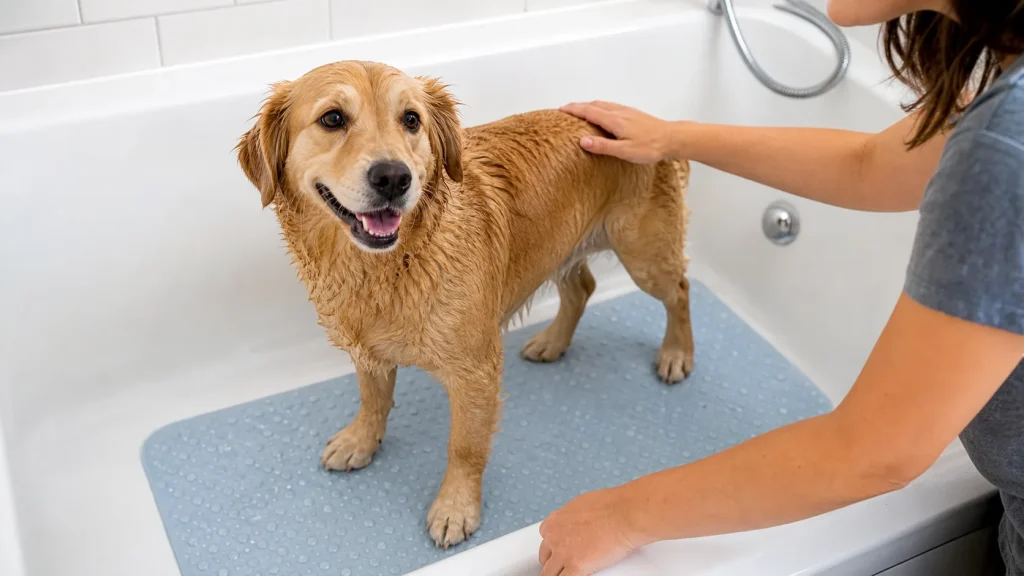
Non-slip bath mat
Slipping makes baths scary. A stable surface is one of the simplest upgrades.
Absorbent towels
Microfiber towels reduce drying time and help control post-bath shaking.
Brush and comb
Brush before and after bathing when appropriate. Coat tools should match the coat type.
Ear and paw care supplies
Use vet-approved ear cleaner only when needed and avoid pushing cotton swabs into the ear canal.
When comparing products, avoid buying only from a pretty photo. Check measurements, material, cleaning instructions, return policy, and whether the item matches your pet’s size, age, health, and behavior. The best choice is usually boring, durable, and easy to use correctly.
Common Mistakes
Bathing weekly just because the dog smells without checking skin or ears.
Using human shampoo.
Skipping the rinse.
Bathing over mats.
Letting a wet thick coat stay damp against the skin.
A final mistake is treating a guide as a one-time task. Pets change. Puppies grow, adult pets age, health shifts, seasons change, and household routines evolve. Review your setup regularly instead of assuming the first version will always be right.
How to Adjust This Guide for Different Pets
For puppies, keep baths short and positive.
For dogs with allergies, follow veterinary plans instead of guessing products.
For heavy undercoats, combine brushing and seasonal baths.
For curly coats, prevent mats between baths.
For anxious dogs, split grooming into smaller sessions.
If you have more than one pet, build the plan around the most vulnerable animal. A confident dog may handle change well, while a nervous cat, senior pet, puppy, or medically fragile animal may need slower steps and more management.
Expert Review Notes
After a decade of testing pet products, I have become cautious about anything marketed as a universal answer. Pets are not identical, and households are not identical. I look for tools and routines that are adjustable, understandable, and forgiving when real life gets messy.
The first review question is safety. Could the product pinch, trap, overheat, irritate skin, encourage overeating, create a choking risk, or make escape easier? If the answer is yes, the product needs more scrutiny no matter how popular it is.
The second review question is maintenance. A bowl that is hard to wash, a carrier nobody can lift, a shampoo that is difficult to rinse, or a kit that nobody updates will fail quietly. Pet care products have to survive daily use, not just look good on delivery day.
The third review question is whether the product fits the behavior you are trying to support. Good gear should make the right action easier. It should not replace supervision, veterinary care, training, or common sense.
Finally, I look at value over time. Cheap items that break quickly are not really cheap, and expensive items that do not solve a real problem are not really premium. The best pet guide purchases are the ones you use repeatedly because they make life smoother for both pet and owner.
Real-Life Scenarios
Scenario 1: The busy weekday owner. This owner needs a plan that works before work, after work, and when they are tired. The right solution should be easy to repeat, easy to clean, and simple enough that it does not fall apart on a rushed morning.
Scenario 2: The apartment household. Space is limited, storage matters, noise matters, and neighbors are close. Compact gear, quiet routines, and controlled access often matter more than large products or complicated setups.
Scenario 3: The multi-pet home. Shared spaces create extra pressure. Food, litter, crates, toys, carriers, gates, and emergency supplies may need labels or separation so one pet does not steal, guard, chase, or block another pet.
Scenario 4: The nervous pet. A fearful dog or cat may need slower steps, softer handling, more hiding options, and fewer surprises. In this case, the best product is often the one that gives the pet more choice and control.
Scenario 5: The family with children. Children need simple rules they can remember: let sleeping pets rest, do not take food or toys away, keep doors closed, and ask an adult before handling supplies. Pet products should support supervision, not replace it.
Buying and Setup Checklist
Before buying anything, define the job. Are you trying to improve safety, hygiene, nutrition, comfort, transport, training, or emergency readiness? Products are easier to compare when the job is clear.
Measure first. For dogs, measure neck, chest, length, height, and weight as needed. For cats, measure carrier space and room setup. Guessing sizes is one of the easiest ways to waste money.
Check cleaning requirements. Pet products touch food, skin, saliva, dirt, litter, fur, and outdoor surfaces. If it cannot be cleaned realistically in your home, it may not be the right item.
Read the warning labels and instructions. This sounds obvious, but many product problems come from using an item in a way the manufacturer did not design it for.
Start with one or two well-chosen products rather than a cart full of maybes. Test them, watch your pet’s response, and upgrade only when you know what is missing.
Budget, Mid-Range, and Premium Options
A budget setup should cover the non-negotiables first: safety, identification, hygiene, transport, and the basic product that does the job. Budget does not have to mean unsafe. It means avoiding decorative upgrades until the fundamentals are handled. Look for simple materials, standard sizing, washable surfaces, and clear return policies.
A mid-range setup is where most owners get the best value. This is the level where products often become easier to clean, more adjustable, more durable, or more comfortable. For many families, a mid-range choice is better than buying the cheapest version twice.
A premium setup can make sense when the item is used every day, when the pet has special needs, or when durability truly changes the cost over time. Premium is harder to justify for products your pet may outgrow, reject, chew, or only use occasionally.
My review rule is simple: spend more where failure creates stress or safety risk, and spend less where preference is still unknown. A carrier, leash, crate, food plan, or emergency kit may deserve more care than decorative accessories.
Also consider replacement cost. A washable mat, durable bowl, sturdy gate, or well-made storage container may save money because it survives cleaning and daily use. A fragile product with great photos can become expensive quickly if it fails in the first month.
When to Ask a Professional
Ask a veterinarian when the question involves health, diet, medications, skin, pain, digestion, sudden behavior change, or chronic symptoms. Product guides can help you shop, but they cannot diagnose a pet.
Ask a certified trainer or behavior consultant when fear, aggression, panic, chasing, escape, or unsafe handling is involved. Good professional help should make the plan clearer and safer, not more intimidating.
Ask a professional groomer when the coat is matted, the dog is difficult to handle, nails are overgrown, or bathing at home creates too much stress. Grooming is not just cosmetic; it can affect comfort and skin health.
Ask local emergency management, shelters, hotels, or boarding facilities about pet policies before a disaster or travel emergency. Written lists are better than memory when conditions are stressful.
If multiple professionals give conflicting advice, bring the conversation back to your pet’s individual needs. Age, medical history, temperament, environment, and household ability should shape the final plan.
Care Quality Check
Before you act on how often should you bathe a dog, check whether the plan is safe, realistic, and specific to your pet. A useful guide should lower confusion, not create a shopping list that ignores age, size, health, temperament, and household routine.
Start with the highest-risk part of the decision. For food, that may be life stage and calorie control. For bathing, it may be skin comfort and rinse quality. For introductions, it may be safe separation. For emergency kits, it may be current medication and carrier access. Handle the non-negotiables before decorative upgrades.
Look at your pet’s response, not just the product description. A carrier, bowl, shampoo, gate, crate, or checklist is only successful if the pet can use it safely and the household can maintain it. If the setup causes fear, rubbing, vomiting, slipping, guarding, escape attempts, or repeated avoidance, slow down and adjust.
Keep records where they help. Save food labels, vaccine records, medication names, microchip information, grooming notes, behavior logs, and product sizes when relevant. Good records make veterinary visits, travel, emergencies, and replacement purchases much easier.
Finally, review the setup after real use. The first version is rarely perfect. A good pet-care system becomes cleaner, safer, and easier to repeat after you see what your dog or cat actually does with it for a week.
Troubleshooting
If the plan is not working, reduce the difficulty before replacing every product. Many pet-care problems come from asking too much too fast: a full-house introduction, a sudden food switch, a long grooming session, or an emergency kit assembled during stress.
If your pet refuses, hides, scratches, barks, vomits, limps, stops eating, or shows pain, stop and reassess. Behavior is information. A pet who is struggling may need a slower setup, a different product, or veterinary support.
If family members are inconsistent, write the plan down. Simple shared rules reduce confusion: where supplies live, what the pet eats, who handles walks, when the kit is checked, or what steps happen before pets meet.
If the product seems wrong, identify the specific failure. Is it size, sound, texture, smell, cleaning, stability, access, or comfort? The more specific the problem, the better your replacement choice will be.
If you feel stuck, ask a qualified professional. A veterinarian, certified trainer, behavior consultant, groomer, or emergency management resource can save time and prevent avoidable mistakes.
Safety and Welfare Notes
This guide is educational and should not replace veterinary care. If your pet has pain, illness, skin problems, digestive symptoms, sudden behavior change, aggression, panic, or special medical needs, get professional advice.
Choose humane handling. Do not force a frightened pet through a process simply because a checklist says it is time. Slower steps are usually safer and more effective than pressure.
Watch for product wear. Cracked plastic, frayed leash material, damaged bowls, broken crate latches, expired food, and old medications can create risks. Inspect supplies regularly.
Keep human safety in the plan too. A stressed animal can scratch, bite, bolt, or panic. Use barriers, leashes, carriers, gloves, distance, and professional help when needed.
Put a review reminder on your calendar. Monthly checks work well for products used daily, while quarterly checks may be enough for stored supplies. Look at fit, cleanliness, expiration dates, broken parts, behavior changes, and whether the setup still matches your pet’s current life stage.
A Simple 7-Day Practical Plan
Day 1: Inspect coat, skin, paws, and ears.
Day 2: Brush and remove loose coat.
Day 3: Choose dog shampoo and bath supplies.
Day 4: Practice tub entry with treats.
Day 5: Do a calm bath and rinse thoroughly.
Day 6: Check skin response after drying.
Day 7: Write down the next likely bath window.
Seven days is not a finish line. It is a starting structure. If your pet needs more time, repeat the easiest successful steps until the routine feels smooth.
FAQ
Can I bathe my dog once a week?
Some dogs need frequent medicated or professional bathing, but many healthy dogs do not need weekly baths. Ask your vet if skin problems are involved.
How often should I bathe a puppy?
Bathe only when needed and keep it gentle. Puppies should learn that handling, water, and drying are safe.
Why does my dog smell after a bath?
Possible causes include poor rinsing, damp undercoat, ear issues, skin infection, dental odor, or rolling in odor again.
Can I use baby shampoo?
Dog-specific shampoo is safer as the default. Ask your veterinarian if your dog has sensitive skin.
Should I clean my dog’s ears during every bath?
Not necessarily. Over-cleaning can irritate ears. Clean when needed or as directed.
What if my dog hates baths?
Use gradual training, better traction, smaller steps, and rewards. Professional groomers can help severe cases.
How do I dry a thick-coated dog?
Towel first, then use safe airflow and brushing as appropriate. Avoid leaving moisture trapped near the skin.

Key Takeaways
- Bath frequency depends on coat, skin, and lifestyle.
- Many dogs need occasional baths, not constant washing.
- Dog shampoo and thorough rinsing matter.
- Brush before bathing to prevent mat problems.
- Skin odor or itching may need veterinary care.
- Traction and calm handling reduce bath stress.
- Track what works for your individual dog.