Quick Answer
A dog growls when you move him because he is uncomfortable, startled, guarding a valued resting spot, in pain, afraid of being handled, or warning that the interaction is too much. Do not punish the growl. Growling is communication. Stop, create space, use management, check for pain, and teach cooperative movement with rewards instead of physically forcing the dog.

As a pet product reviewer with 10 years of hands-on testing experience, I treat behavior questions as evidence-gathering problems first and shopping problems second. The right tool can make management easier, but the safest answer usually comes from understanding the trigger, the body language, the timing, and whether a medical issue could be involved.
Why Growling Should Be Treated as Information
Many owners hear a growl and feel disrespected. That reaction is understandable, but it is not useful. Growling is a warning signal. It tells you the dog is uncomfortable before the situation escalates to snapping or biting.
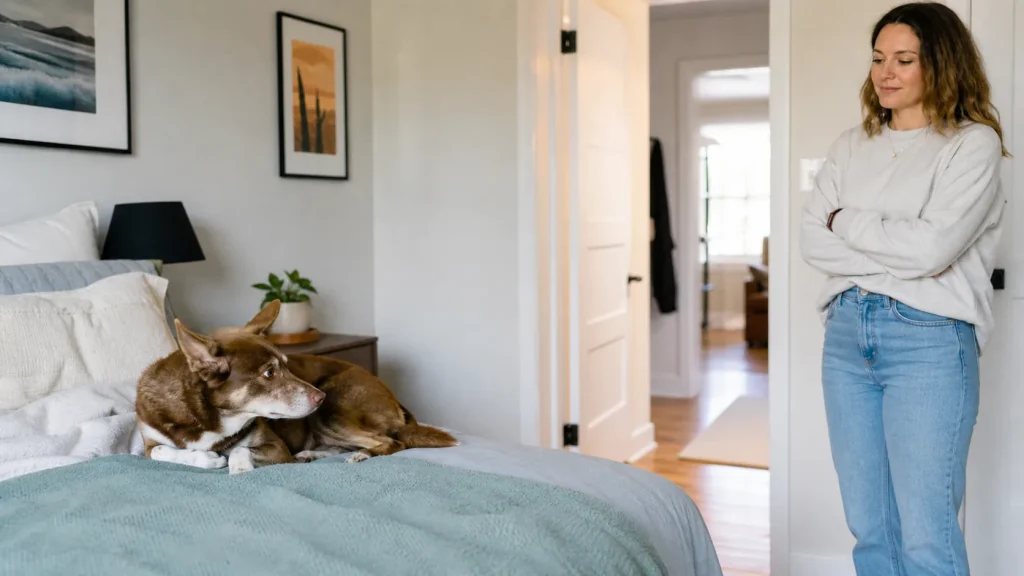
When a dog growls because you move him from a couch, bed, crate, or resting spot, several causes are possible: pain, sleep startle, resource guarding, fear of handling, or a learned history that moving predicts pressure.
The worst product in this situation is force. A tougher leash, louder voice, or physical confrontation can suppress warning signs and increase bite risk. The best tools are management, distance, veterinary assessment, and reward-based movement cues.
As a reviewer, I treat growling cases as safety cases. The goal is not to win the furniture argument. The goal is to prevent bites and build a way for the dog to move voluntarily.
Dog behavior content should be careful because a simple-looking habit can have several causes. A useful article should not blame the dog, promise instant fixes, or sell a product before considering health, environment, training history, and safety.
Method 1: Make the Situation Safe First
Before training, stop rehearsing risky physical removal. Safety and assessment come first.
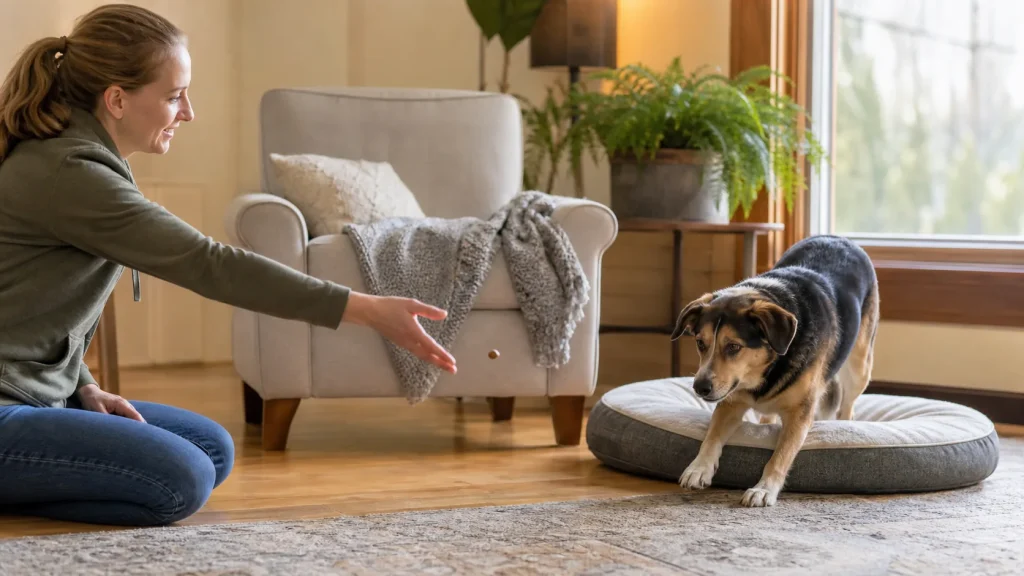
Step 1: Stop reaching in
If your dog growls, do not grab the collar, shove, or pull. Step back and give space.
Step 2: Check the context
Was the dog asleep, resting, eating, guarding a chew, sore, startled, or trapped? Context tells you what to change.
Step 3: Use a lure away
Toss a treat away from the resting spot so the dog chooses to move. Do not trade right in the dog’s face if guarding is intense.
Step 4: Block access preventively
If the couch or bed creates conflict, use gates, closed doors, or a house line before the dog settles there.
Step 5: Schedule a vet check
Pain can make touch and movement threatening. This is especially important for sudden growling, senior dogs, limping, or stiffness.
Step 6: Protect children
Children should not move, hug, climb on, or wake a dog who has growled. Use barriers and adult supervision.
Keep this phase calm and observational. The goal is not to catch the dog being wrong. The goal is to understand what makes the behavior more likely and what makes it easier for the dog to choose a safer response.
Method 2: Teach a Voluntary Move Cue
A dog who can move on cue does not need to be physically removed as often. Train the cue away from conflict first.
Step 1: Choose a cue
Use “off,” “let’s go,” or “bed.” Teach it when your dog is calm and not guarding anything.
Step 2: Reward movement
Say the cue, toss a treat a few feet away, and praise when the dog moves. Repeat until the cue predicts easy rewards.
Step 3: Add a target bed
Teach your dog that moving to their own bed pays well. Make the alternative better than the disputed spot.
Step 4: Practice low-stakes setups
Ask for movement from a mat, rug, or low-value spot before using the cue near furniture.
Step 5: Use management during training
Prevent access to conflict spots when you cannot train calmly.
Step 6: Get help for guarding or bites
If growling includes snapping, lunging, biting, or guarding multiple resources, work with a qualified professional.
Behavior change should happen below the level where your dog is panicking, guarding intensely, hurting, or rehearsing the unwanted behavior. If the dog cannot eat, disengage, rest, or respond, the setup is too hard for learning.
Tool Solution: Products That Can Support the Plan
No product can diagnose a behavior problem, but the right gear can reduce rehearsal, improve safety, and make good timing easier. I judge behavior products by comfort, humane use, cleaning, durability, adjustability, and whether they support a clear plan rather than masking the warning signs.
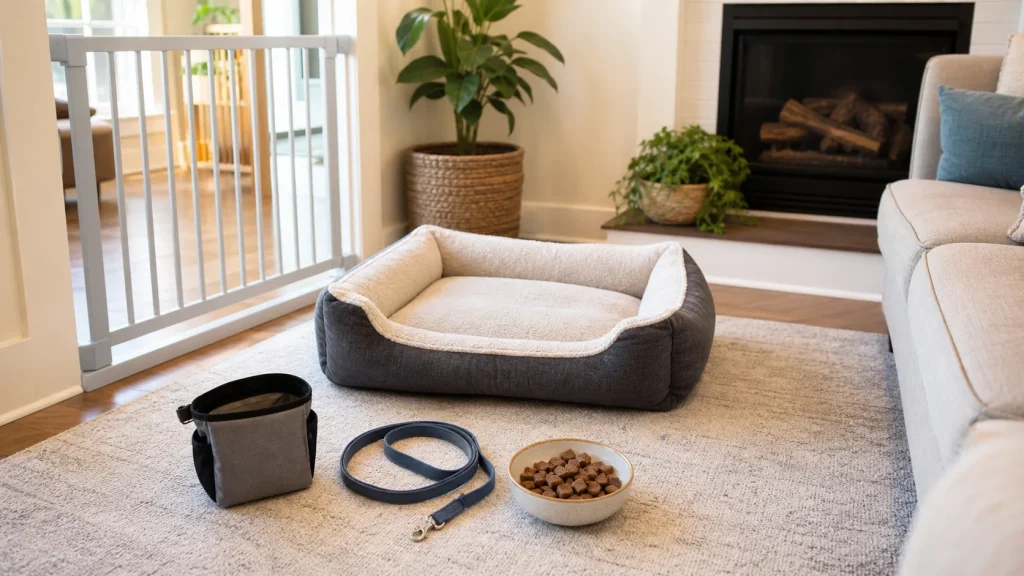
Baby gates
Gates prevent access to conflict areas and protect people while training develops.
Treat pouch
Fast rewards let you reinforce voluntary movement without grabbing.
Comfortable dog bed
A desirable alternative resting spot makes movement easier.
House line
A lightweight leash used under supervision can help guide a dog without collar grabbing.
Pet steps or ramp
For dogs with pain or mobility issues, steps or ramps may reduce discomfort when getting on or off furniture.
Avoid products that promise to “stop” behavior through fear, pain, or surprise. In behavior work, suppressing communication can make the situation look quieter while the underlying stress remains unresolved.
Common Mistakes
Punishing the growl.
Dragging the dog by the collar.
Assuming the dog is dominant.
Ignoring sudden behavior change that could signal pain.
Allowing children to practice risky interactions.
Another mistake is changing several things at once. If you change food, add supplements, buy new gear, alter the routine, and begin training all in the same week, you may not know what helped or what made things worse.
How to Adjust the Plan
For senior dogs, rule out pain and mobility issues.
For resource guarding, reduce access and avoid direct confrontations.
For sleep startle, wake with voice from a distance.
For small dogs, avoid scooping them up without warning.
For bite history, use professional help immediately.
Adjustments should be based on the dog in front of you. Age, health, breed tendencies, history, environment, and owner capacity all matter. A plan that works for a confident adult dog may be too much for a fearful puppy or painful senior.
Behavior Log: What to Track for 7 Days
Track the time of day, location, what happened right before the behavior, what the dog did, what humans did, and how long recovery took. A simple log often reveals patterns that memory misses.
Include physical signs: appetite, stool quality, sleep, scratching, limping, drinking, energy, and sensitivity to touch. Behavior and health are not separate systems.
Record intensity on a one-to-five scale. A one might be mild interest or a brief lick; a five might be panic, injury risk, guarding, or inability to recover. Intensity helps you see progress even before the behavior disappears.
Write down product changes. New treats, chews, shampoos, gear, beds, cleaners, foods, supplements, or household products can affect behavior or skin comfort.
Bring the log to your veterinarian, trainer, or behavior consultant. Specific examples lead to better advice than “he always does it” or “she is suddenly weird.”
Real-Life Scenarios
Scenario 1: The problem only happens at night. Night behavior is easy to misread because the house is quiet and owners are tired. Look at the full day: exercise, stress, meals, itching, visitors, alone time, and pain. The nighttime behavior may be the final visible sign of something that started hours earlier.
Scenario 2: The dog is fine with one person but not another. This often means handling style, timing, body posture, or history matters. One person may lean over, grab, move too fast, or react loudly. Compare the details instead of assuming the dog is random.
Scenario 3: The behavior started after a routine change. New work hours, new food, new flooring, a new pet, construction noise, travel, boarding, grooming, or a stressful vet visit can change behavior. Dogs notice patterns that humans forget.
Scenario 4: The behavior is embarrassing in front of guests. Embarrassment makes owners rush. That is when people grab collars, scold, force greetings, or skip management. Use gates, leashes, safe rooms, and planned routines before guests arrive.
Scenario 5: The behavior improves, then returns. Relapse is common when management stops too early or the trigger gets harder. Go back to the last easy step, rebuild successful repetitions, and check whether health, stress, or environment changed.
Home Management Plan
For why does my dog growl when I move him, the most useful home plan is simple enough to repeat every day. Pick one place to track notes, one person to lead the routine, and one primary management change that prevents the dog from practicing the problem while you gather better information.
Start by lowering pressure in the environment. That might mean using a gate, choosing a quieter walk route, cleaning the yard faster, changing the bedtime routine, blocking a window view, or giving the dog a safe resting area. Management is not giving up on training; it is how you stop the problem from getting stronger while the dog learns a better pattern.
Next, decide what you will reward. Many owners only notice the unwanted behavior. Instead, reward the small moments you want more of: walking away from a trigger, settling on a mat, choosing a chew, checking in with you, relaxing after a noise, or moving voluntarily when asked. These tiny wins are the building blocks of a behavior plan.
Keep the plan humane and measurable. If the dog is panicking, guarding, limping, hiding, refusing food, or escalating, the setup is too hard or the issue may need medical attention. A good plan should make the dog safer and more able to think, not quieter because they are afraid to communicate.
In product terms, buy only what supports the plan you can actually follow. A pet camera is useful if it changes what you do with alone-time training. A gate is useful if it prevents rehearsal. A lick mat is useful if it helps calm settling. Gear should make the routine clearer, safer, and easier to repeat.
How to Measure Improvement
Do not measure progress only by asking whether the behavior is gone. Dog behavior often improves in layers. The first sign may be that your dog recovers faster, accepts food sooner, responds at a greater distance, sleeps better, or needs fewer interruptions from you.
Track frequency, intensity, and recovery time. Frequency tells you how often the behavior happens. Intensity tells you how big the response is. Recovery time tells you how quickly the dog can return to normal. If two of those three numbers are improving, the plan is probably moving in the right direction.
Also watch for spreading. A behavior that starts in one room, one walk route, one time of day, or one trigger should not gradually appear in more places. If it spreads, pause increases in difficulty and look again at health, stress load, and management gaps.
Give each change enough time to be evaluated. One good day does not prove the problem is fixed, and one bad day does not mean the plan failed. Look for a trend over a week or two, especially when fear, pain, allergies, anxiety, guarding, or digestive issues might be involved.
Escalate sooner when safety or health is part of the picture. Bite risk, self-injury, severe panic, sudden adult-onset behavior change, limping, skin wounds, major appetite change, vomiting, diarrhea, or inability to settle are not wait-and-see problems. Those cases deserve veterinary or qualified behavior support.
Expert Review Notes
The first thing I look for is whether the product or plan lowers risk. A gate that prevents rehearsal, a camera that shows real alone-time behavior, or a mat that creates a safe station may be more valuable than a flashy gadget.
The second thing I look for is whether the dog still has communication. If a tool stops barking, growling, licking, or movement only by making the dog afraid to respond, it is not solving the problem. It is hiding information.
The third thing I look for is maintenance. Behavior plans fail when they are too complicated. A tool should make the routine easier for an ordinary household: quick to clean, easy to store, safe to use, and realistic to repeat.
The fourth thing is fit. A muzzle, harness, cone, bed, gate, or enrichment toy that fits poorly can create new stress. Measure first and supervise until you know how your dog uses the product.
Finally, I look for honesty. Behavior products should support veterinary care, reward-based training, environmental management, and professional help when needed. They should not promise to replace those things.
Buying Guide: What to Look For Before You Spend Money
Start by naming the job. Are you trying to prevent rehearsal, protect skin, reduce access, create distance, observe alone-time behavior, support calm enrichment, or make a safe resting area? A product is easier to choose when the job is specific.
Measure and fit carefully. Harnesses, cones, muzzles, boots, gates, beds, crates, and mats can all fail if the fit is wrong. Poor fit can add rubbing, panic, escape risk, or frustration to an already sensitive behavior problem.
Choose washable materials. Behavior work often involves food rewards, saliva, outdoor dirt, stool cleanup, paw moisture, bedding, or stress-related mess. If a product cannot be cleaned easily, it is less useful than it looks.
Avoid harsh behavior-stopping tools. Shock collars, prong collars, choke chains, startle devices, and punishment-based sprays may interrupt visible behavior, but they can increase fear, hide warning signs, or create new associations.
Buy one useful management tool before buying five supplements. For many behavior issues, a baby gate, leash, treat pouch, camera, washable mat, or proper cleanup tool does more than a cabinet full of untested additives.
Check return policies. Dogs have preferences, body shapes, chewing habits, and sensitivities. A product that is excellent for one dog may be wrong for another. The ability to return or exchange matters.
Low, Medium, and High Risk Versions
Low risk: The behavior is mild, predictable, and easy to interrupt. Your dog recovers quickly, eats normally, sleeps normally, and shows no pain, panic, aggression, or injury risk. In this version, logging, routine changes, enrichment, and simple management may be enough.
Medium risk: The behavior is repeated, increasing, or affecting daily life. Your dog may show stress signs, mild guarding, skin irritation, stool problems, destructive behavior, or difficulty settling. This level usually deserves a more structured plan and may need veterinary or trainer input.
High risk: The behavior involves bite risk, self-injury, severe panic, sudden major change, limping, bleeding, infection signs, repeated vomiting or diarrhea, escape attempts, or a household member who feels unsafe. High-risk cases should not be handled by internet advice alone.
Risk level can change. A mild behavior can become serious if rehearsed daily, and a serious behavior can become safer when management is used well. Review risk weekly, not just at the start.
If you are unsure which level applies, choose the safer interpretation. Management and professional advice are rarely wasted when safety or health might be involved.
When to Ask a Professional
Ask a veterinarian when the behavior is sudden, intense, linked to pain, paired with appetite or stool changes, connected to skin problems, or appears in an older dog without a clear environmental trigger.
Ask a qualified trainer or behavior consultant when the behavior involves fear, guarding, panic, aggression, escape, self-injury, or unsafe interactions with people or other animals.
Ask for help sooner if children are involved. Children cannot reliably read subtle dog stress signals, and many behavior problems become more dangerous when kids try to intervene.
A good professional should ask about context, health, body language, history, and safety. Be cautious with anyone who recommends punishment, dominance confrontations, or forcing the dog to “get over it.”
Safety and Welfare Notes
This article is educational and does not replace veterinary care. Behavior changes can be symptoms of pain, illness, allergies, digestive problems, sensory decline, or anxiety disorders.
Do not punish warning signs. Growling, hiding, refusing food, freezing, licking, and avoidance are data. If the warning signs disappear because they were punished, the dog may escalate with less notice next time.
Use management while training develops. Gates, leashes, safe rooms, cleanup routines, supervision, and distance prevent repeated rehearsal of unsafe or unwanted behavior.
If there is bite risk, self-injury, severe panic, or escalating aggression, prioritize safety and professional help over online troubleshooting.
Recheck the plan every week. If the behavior is less frequent, less intense, and recovery is faster, you are probably moving in the right direction. If the behavior is spreading to new contexts or becoming harder to interrupt, treat that as a sign to simplify the setup and ask for help.
A Simple 7-Day Practical Plan
Day 1: Stop physical removal and manage access.
Day 2: Practice treat tosses away from neutral spots.
Day 3: Teach a move cue.
Day 4: Build value for the dog’s own bed.
Day 5: Practice low-stakes off-cue reps.
Day 6: Review pain or stiffness signs.
Day 7: Decide if a vet or behavior professional is needed.
Seven days is a starting point, not a cure deadline. Behavior change often takes repetition, management, and careful adjustment. If things get worse, reduce difficulty and ask for help.
FAQ
Should I punish my dog for growling?
No. Punishing growling can suppress warning signs and increase bite risk.
Could growling mean pain?
Yes. Pain can make touch or movement threatening, especially if the behavior starts suddenly.
Is my dog being dominant?
Dominance is often an unhelpful explanation. Pain, fear, guarding, and handling discomfort are more useful possibilities to assess.
How do I move a growling dog?
Create space and lure the dog away with a treat rather than grabbing. Then prevent the setup from repeating.
Can resource guarding include beds or couches?
Yes. Dogs may guard food, toys, chews, resting places, or even people.
What if my dog has bitten?
Stop risky interactions and contact a qualified professional.
Can a dog learn to get off furniture politely?
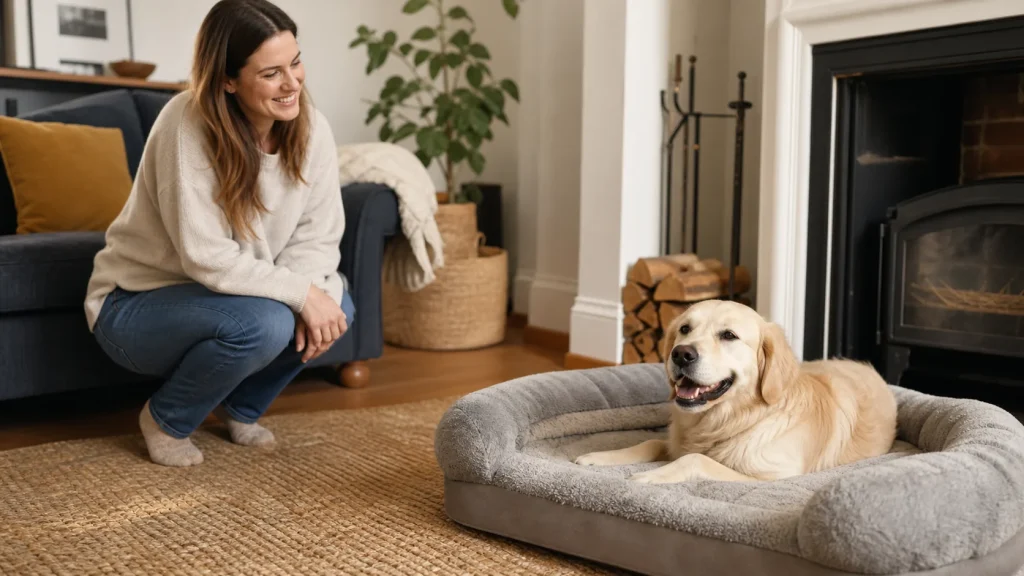
Yes, if you teach a voluntary cue and make the alternative rewarding.
Key Takeaways
- Growling is communication, not something to punish.
- Pain, guarding, fear, and startle can all cause growling when moved.
- Stop grabbing and create space.
- Teach a voluntary move cue with rewards.
- Management prevents risky rehearsals.
- Children need strict safety boundaries.
- Bites or escalating warnings require professional help.