Quick Answer
To teach a dog to stay with distractions, build the behavior in three parts: duration, distance, and distraction. Start with one second of stillness, reward in position, use a clear release word, and increase only one difficulty at a time. A reliable stay is not created by repeating “stay” louder; it is created by teaching your dog exactly when to hold position and when they are free to move.
After 10 years of reviewing dog training products, I have learned that obedience problems usually improve fastest when owners combine clear criteria, humane training, and practical tools. The tool helps you manage the moment; the training changes the habit. This guide is written for everyday dog owners who want a realistic plan they can use at home, on walks, and in normal American family life.
Why Dogs Break Stay Around Distractions
Many dogs can sit for a treat but cannot stay when life happens. The owner steps away, a door opens, a toy rolls by, or another dog appears, and the stay falls apart. This is normal because stay is not one skill. It is stillness under changing conditions.
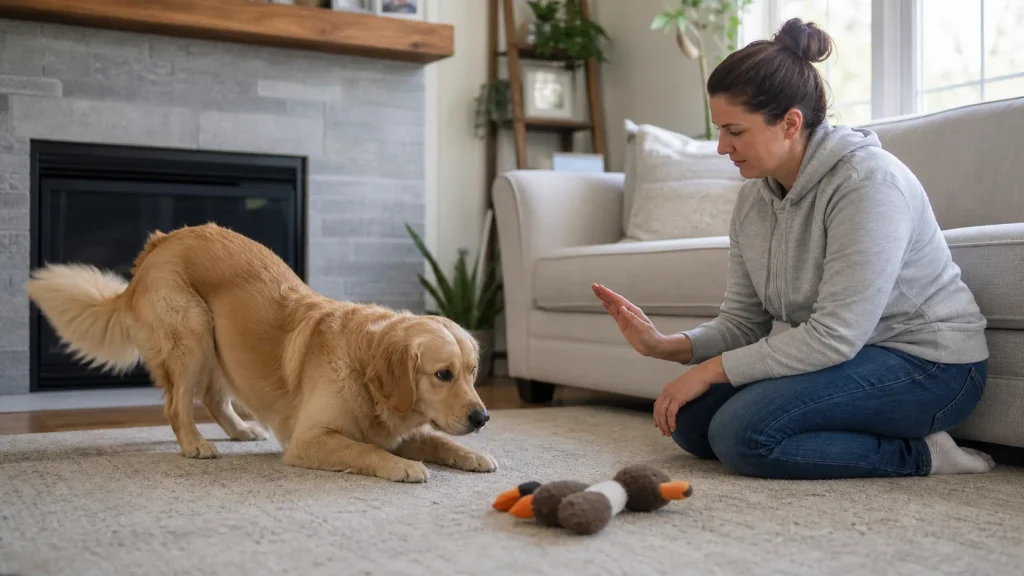
The most common training mistake is adding distance too early. People ask a dog to stay, walk across the room, and then feel frustrated when the dog follows. From the dog’s view, following humans has been rewarded for months. Staying behind is a new rule that needs careful teaching.
A strong stay is useful for doorways, mealtime, grooming, photos, vet visits, car safety, and everyday impulse control. It is also one of the obedience behaviors where precision matters. If the dog does not know the release word, they have to guess when the exercise is over.
In product testing, I often see owners buy place cots, mats, clickers, and treat pouches for stay training. Those tools can help, but the important part is criteria. You must decide what counts, reward it clearly, and avoid making the next repetition too hard.
The most reliable path is to reduce the difficulty, reward the behavior you want, and build the skill in layers. This is also the approach supported by modern reward-based training guidance from veterinary and humane organizations. It may look slower at first, but it creates better long-term behavior because the dog understands what to do instead of simply learning what to avoid.
Method 1: Build Duration Before Distance
Duration means how long your dog holds the position. Teach duration while you are still close enough to reward quickly.
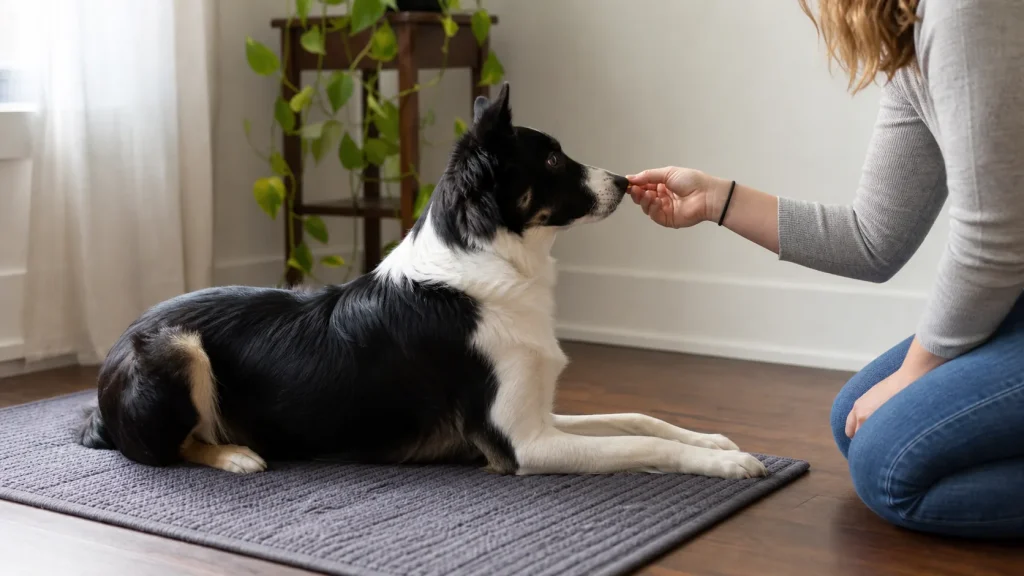
Step 1: Choose the position
Start with sit or down. Down is often easier for long stays, while sit is useful for doorways and greetings. Pick one for the session.
Step 2: Add a release word
Use a word such as “free,” “okay,” or “release.” Say it, then encourage your dog to move. The release word tells the dog when the stay is over.
Step 3: Reward one second
Ask for the position, pause for one second, mark, and feed while your dog is still in position. Rewarding in place teaches the dog not to pop up.
Step 4: Build slowly
Move from one second to two, then three, then five. Mix in easy repetitions so the dog does not learn that every stay becomes harder.
Step 5: Keep your body quiet
Do not hover, repeat the cue, or wave treats around. Calm handling helps the dog understand that stillness is the job.
Step 6: Release clearly
After several rewards in position, say your release word and invite movement. Without a release, many dogs break because they do not know the exercise has an ending.
Keep the first sessions short enough that your dog finishes wanting more. In practical obedience training, five clean repetitions are more useful than twenty messy ones. When the dog is successful, the habit strengthens; when the dog rehearses the unwanted behavior, that habit strengthens too.
Method 2: Add Distance and Distractions Separately
Once your dog can stay for short duration near you, add distance and distractions as separate challenges.
Step 1: Take one half-step back
Ask for stay, move one small step, return immediately, reward in position, then release. The reward happens after you return, not when the dog runs to you.
Step 2: Vary your movement
Step sideways, turn your shoulders, bend slightly, or touch a doorknob. These small movements are distractions and should be trained before big ones.
Step 3: Add household distractions
Drop a towel, roll a toy slowly, open a cabinet, or have another person walk past at a distance. Keep the first distractions boring.
Step 4: Use the three-D rule
Duration, distance, and distraction should not all increase together. If you add a toy rolling past, reduce duration and stay close.
Step 5: Reset without drama
If your dog breaks stay, calmly guide them back or ask for the position again. Make the next repetition easier. Mistakes are information.
Step 6: Practice in real places
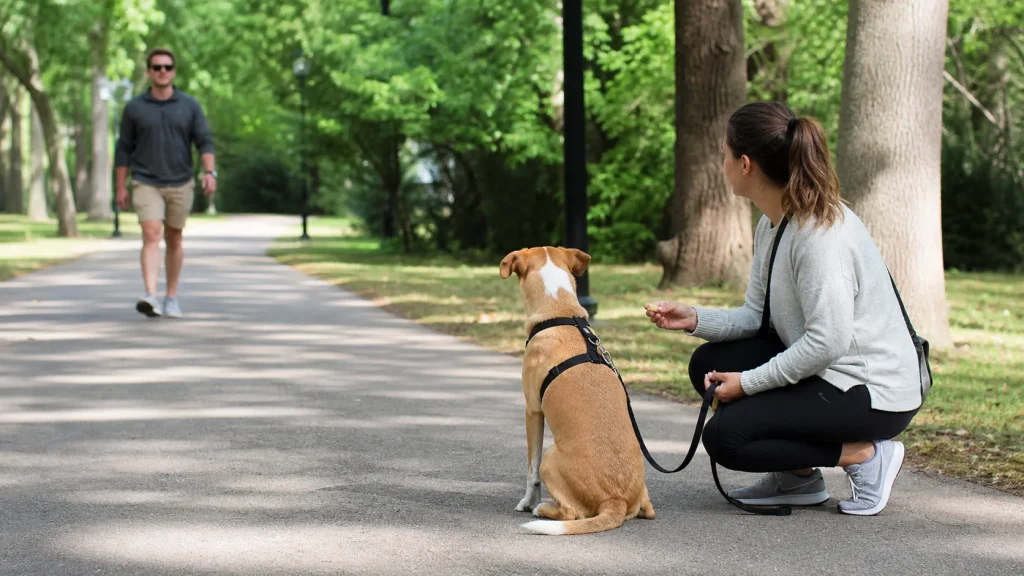
Try the porch, driveway, training class, vet lobby, or park edge only after the indoor behavior is reliable. New locations count as distractions.
Real-world training should feel slightly challenging but not chaotic. If your dog cannot eat, respond, or recover, the setup is too hard. Step back, simplify, and let the dog collect successful repetitions before trying again.
Tool Solution: Products That Can Support Training
No product replaces a good training plan, but the right gear can reduce risk and make timing easier. I evaluate training tools by comfort, safety, adjustability, durability, ease of cleaning, and whether the product helps the dog learn without intimidation.
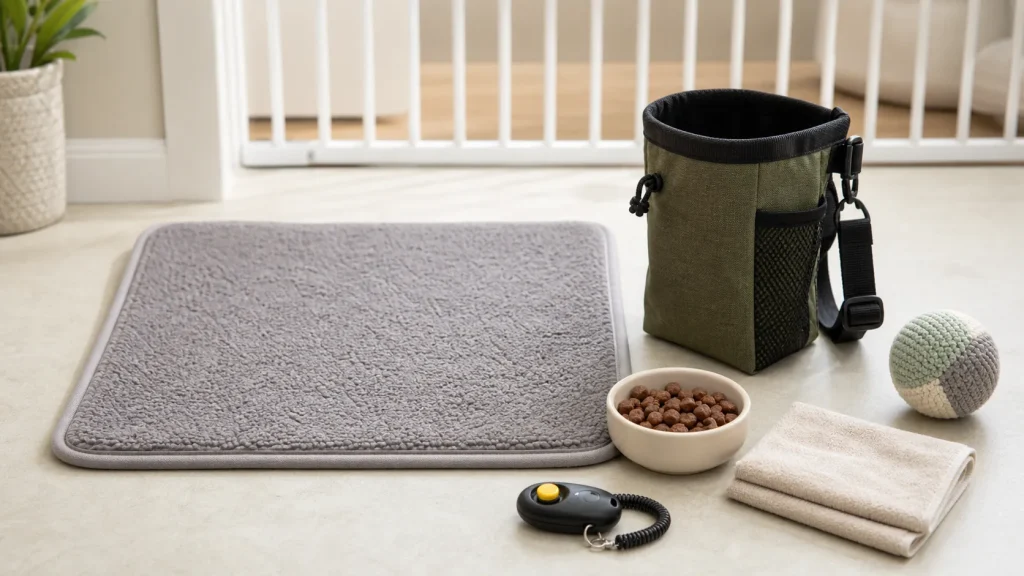
Clicker or marker word
A marker helps you identify the exact moment your dog held position. This is especially useful when building duration.
Treat pouch
Fast reward delivery keeps the dog from jumping up to chase food. Feed directly to the mouth while the dog stays in position.
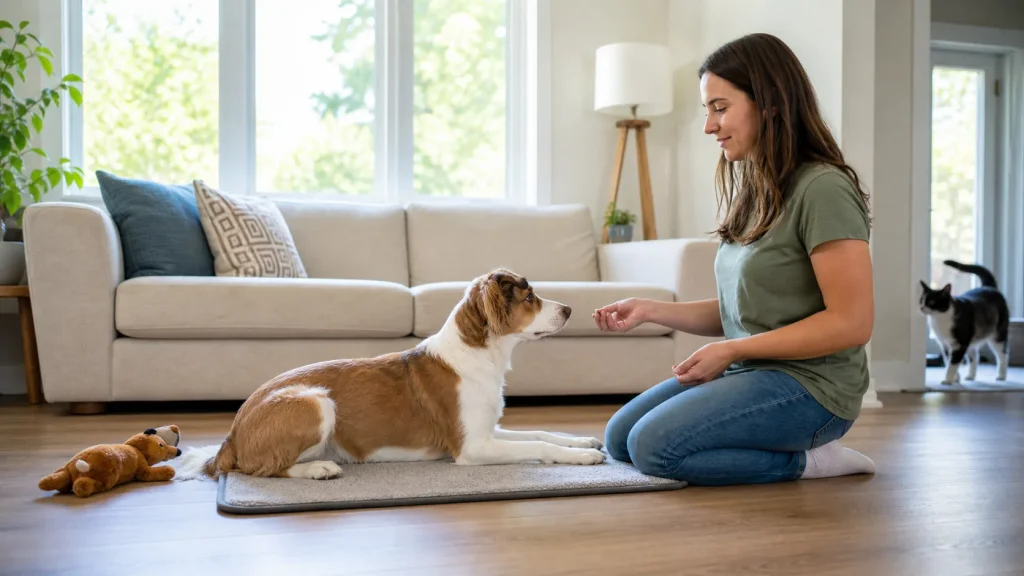
Training mat
A mat gives the dog a visible target and can make stay easier to understand. It is excellent for place training and calm household routines.
Baby gate
A gate can add safety during doorway stay practice. It prevents one mistake from becoming a dangerous dash outside.
Low-distraction props
Towels, toys, bowls, and chairs help you create controlled distractions before practicing in busy environments.
When comparing products, avoid choosing only by star rating. Read the sizing chart, check return policies, and think about your specific dog: body shape, strength, chewing habits, sensitivity, and daily environment. The best obedience tool is the one you can use consistently and humanely.
Common Mistakes
Do not repeat stay every second. Repetition can become background noise and may teach the dog that the first cue did not matter.
Do not call your dog out of every stay. If recall always ends the exercise, the dog may start leaning forward and anticipating movement.
Do not punish a broken stay. Lower the difficulty and reward success instead.
Do not add distance before the dog understands duration. One stable second near you is better than ten failed steps away.
Do not forget the release word. Stay without a clear ending is confusing for many dogs.
Another mistake is expecting one perfect session to solve a rehearsed habit. Dogs learn through patterns. Your job is to make the desired behavior easier to repeat and the unwanted behavior less useful.
How to Use Stay in Everyday Life
At doorways, use short stays with a physical backup such as a leash or gate. Safety should not depend on a new behavior.
During meals, practice a brief stay before setting the bowl down, then release the dog to eat. This builds impulse control without teasing.
For grooming, use a down stay on a mat and reward calm handling in small pieces. Do not ask for long stillness before the dog is comfortable being touched.
For photos, reward frequently and keep sessions short. A dog who enjoys the process will look better and hold position longer.
In public, use stay only where it is safe. Do not leave a dog unattended in a stay around strangers, traffic, or other dogs.
If progress stalls, look at the whole routine: sleep, exercise, enrichment, pain, stress, household consistency, and the difficulty of the environment. Obedience is not separate from daily life. A dog who is uncomfortable, overwhelmed, or under-stimulated will have a harder time learning.
Expert Review Notes: How I Judge Progress
When I test pet training products or evaluate a training plan, I do not judge success by one impressive moment. I look for repeatability. A dog who performs once in the kitchen has shown potential; a dog who can repeat the behavior in several realistic settings has started to build a dependable habit. For how to teach a dog to stay with distractions, that difference matters because owners often move from practice to real life too quickly.
The first metric I watch is recovery time. A dog does not have to be perfect to be improving. If the dog notices a distraction, makes a mistake, and then recovers faster than last week, the training is working. Shorter recovery time usually means the dog is less overwhelmed and understands the pattern more clearly.
The second metric is handler consistency. The leash, crate, cue, mat, or treat pouch may look like the center of the plan, but the human rules are the real equipment. If the cue changes every session, the reward comes late, or one family member allows the old behavior, progress will wobble. Before blaming the dog, I always check whether the people are using the same criteria.
The third metric is environmental difficulty. A quiet living room, a suburban sidewalk, a pet store entrance, and a busy park are not the same classroom. Dogs do not generalize as automatically as humans expect. If your dog succeeds at home and fails outside, that does not mean the dog is being willful. It means the lesson needs to be rebuilt in smaller steps.
The fourth metric is body language. Good obedience should make the dog clearer and more relaxed over time. I want to see softer muscles, easier breathing, faster re-engagement, and a dog who can take food or respond to a simple cue. If the dog looks shut down, frantic, or conflicted, I would change the plan before I changed the product.
The fifth metric is durability. A plan is not finished when the behavior appears once. It is finished when the owner can maintain it with normal life rewards, occasional food reinforcement, and realistic management. That is why I prefer humane, reward-based training: it gives the dog information and motivation, not just pressure.
Troubleshooting: What to Do When Training Stalls
If your dog is not improving, reduce the difficulty before changing everything. Most obedience problems get worse when owners keep testing at a level where the dog is already failing. Move farther away, shorten the session, use better rewards, or return to a familiar location. Easier practice is not a step backward; it is how you rebuild clean repetitions.
If your dog ignores food, do not assume they are not food motivated. Many dogs stop eating when they are stressed, excited, too close to a trigger, physically uncomfortable, or already full. Try a quieter location, softer treats, smaller pieces, or a different time of day. If a normally hungry dog cannot eat in a training setup, the setup is probably too hard.
If progress is good for one person but poor for another, compare details. Voice tone, leash length, reward timing, walking speed, and body position can all change the picture for the dog. Have the more successful handler demonstrate the exact rhythm, then let the second person copy it in an easy setting.
If the behavior improves at home but disappears outside, add a middle step. Practice on the porch, in the garage, in the driveway, near a quiet parked car, or at the edge of a calm field. Many owners jump from indoor training straight to the hardest version of the problem. The middle steps are where reliability is built.
If your dog becomes more excited when treats appear, feed lower and slower. Deliver the treat where you want the dog to be, keep your hand movement calm, and use smaller pieces. For some dogs, the treat pouch itself becomes a distraction, so practice wearing it around the house without always training.
If you feel frustrated, stop the session before your handling gets sharp. Dogs are excellent readers of tension. A two-minute break, a simpler repetition, or a calm walk home can protect the training relationship. The best trainers I know are not the ones who never hit a rough moment; they are the ones who notice early and adjust.
Safety and Welfare Notes
Training should never put your dog, other people, or other animals at unnecessary risk. Use leashes, gates, distance, crates, harnesses, and controlled setups while the skill is still developing. Management is not a substitute for training, but it prevents bad rehearsals and keeps everyone safe during the learning process.
Avoid tools or techniques that rely mainly on fear, pain, or intimidation. They may interrupt behavior in the short term, but they can also increase stress, suppress warning signs, or damage trust. For most family dogs, reward-based training combined with thoughtful management is safer and more sustainable.
Health can affect obedience. Pain, digestive upset, poor sleep, hearing loss, vision changes, skin irritation, and medication changes can all alter behavior. If a dog suddenly starts failing a skill they previously knew, consider a veterinary check rather than assuming the dog has become stubborn overnight.
Finally, know when to ask for help. A certified reward-based trainer, veterinary behaviorist, or qualified behavior consultant can be worth it when the behavior involves fear, panic, aggression, escape risk, or a handler who feels physically unsafe. Good professional help should make the plan clearer, kinder, and more practical.
Practice Readiness Checklist
Before you practice how to teach a dog to stay with distractions, make the session small enough that both you and your dog can succeed. Choose one skill, one location, one reward type, and one clear stopping point. A short session that ends cleanly is more valuable than a long session that turns into frustration.
Check the environment first. If there are too many strangers, dogs, noises, smells, visitors, or household interruptions, move farther away or practice indoors. Obedience training works best when the dog is aware of the world but still able to eat, respond, and recover.
Prepare the tools before the dog is excited. Have your leash, harness, crate setup, mat, treat pouch, long line, or gate ready before asking for behavior. Good setup prevents rushed handling and keeps the dog from rehearsing the habit you are trying to change.
Match rewards to difficulty. Kibble may work in the kitchen, but a busy sidewalk, night crate routine, or stranger passing on a walk may require softer, smellier, higher-value treats. If your dog cannot take food, reduce the challenge instead of pushing harder.
End with information, not blame. If the dog struggles, note what made the repetition too hard: distance, duration, distraction, timing, equipment, pain, fatigue, or handler inconsistency. That note tells you exactly how to make the next session fairer and more productive.
A Simple 7-Day Training Plan
Day 1: Teach the release word and reward one-second stays.
Day 2: Build to three to five seconds with you standing close.
Day 3: Add one small step away, then return and reward.
Day 4: Add body movement such as turning or bending.
Day 5: Add mild household distractions while reducing duration.
Day 6: Practice on a mat in a new room or quiet outdoor area.
Day 7: Combine short duration, one step of distance, and one easy distraction.
This 7-day plan is a starting structure, not a promise that the behavior will be finished in a week. Some dogs need a few days; others need several months. The right pace is the one that keeps your dog learning without panic, frustration, or repeated failure.
FAQ
What is the difference between stay and wait?
Many trainers use stay to mean hold position until released and wait to mean pause briefly before moving. The exact words matter less than consistency.
How long should my dog hold stay?
Start with one second. For family life, 30 to 60 seconds is useful, but reliability matters more than impressive duration.
Why does my dog break stay when I step away?
Distance is hard. Build duration first, then add tiny steps away while returning to reward in position.
Should I use a hand signal for stay?
A hand signal can help, especially in noisy places. Pair it with the verbal cue and teach both clearly.
Can puppies learn stay?
Yes, but keep sessions short and expectations age-appropriate. Puppies need many easy wins.
Should I call my dog from stay?
Sometimes, but not every time. Often return to your dog, reward in position, then release them calmly.
What if my dog gets up before I release?
Reset calmly and make the next repetition easier. Breaking stay usually means the criteria changed too quickly.
Key Takeaways
- Stay is built from duration, distance, and distraction.
- Increase only one difficulty at a time.
- Reward while the dog is still in position.
- Use a clear release word every session.
- Do not repeat the stay cue over and over.
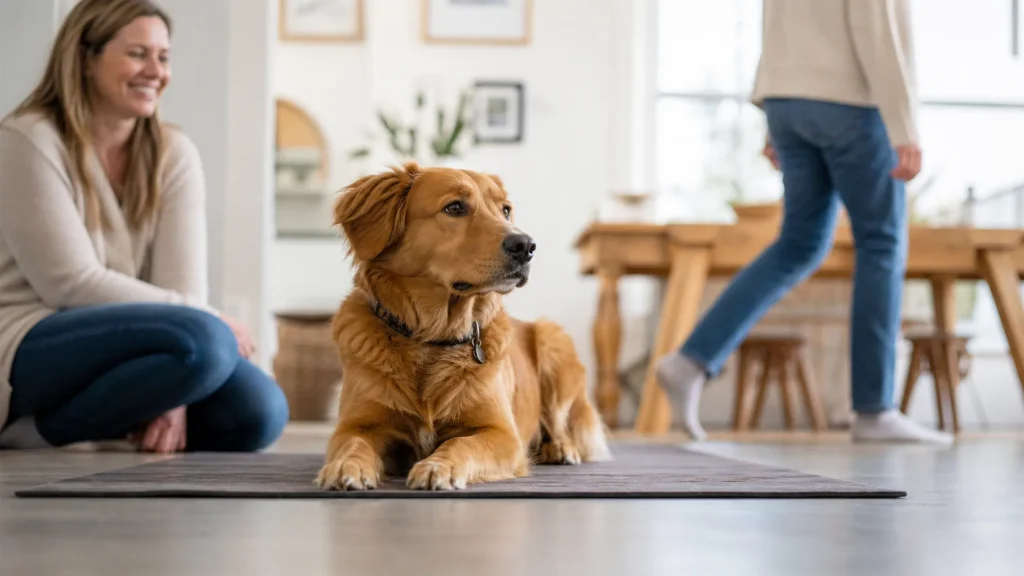
- A mat can make stay easier for many dogs.
- Real-life stay should always be practiced with safety in mind.
Sources
- American Kennel Club: how to teach your dog to stay
- American Kennel Club: release words and stay training
- American Veterinary Society of Animal Behavior: humane training position statements
- Humane Society of the United States: positive reinforcement training
- VCA Animal Hospitals: using reinforcement and rewards to train your pet