
Quick Answer
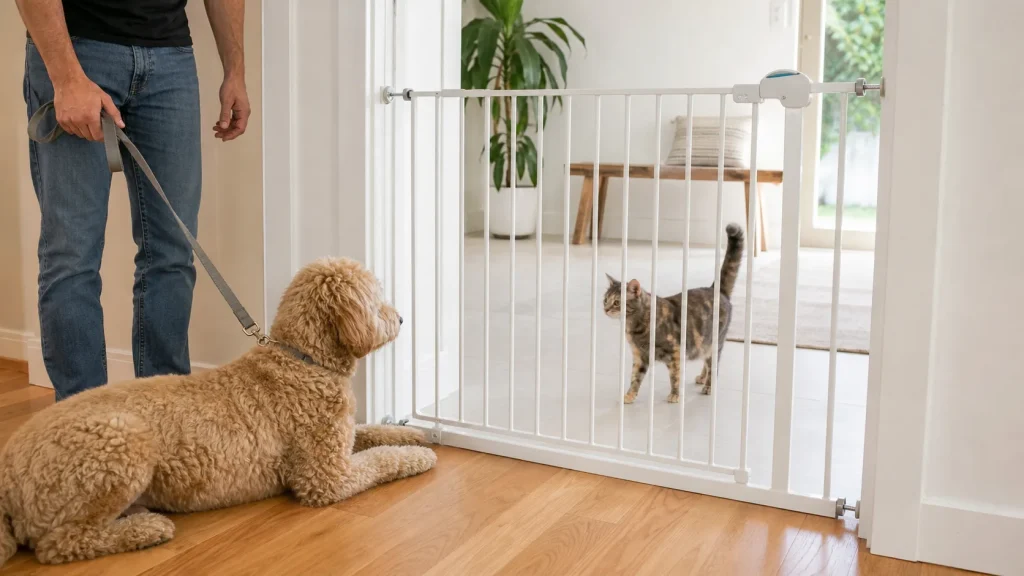
To introduce a dog to a cat safely, keep them separated at first, create a cat safe room, swap scent, use barriers such as baby gates, keep the dog leashed during early visual introductions, and reward calm behavior. Never allow chasing, never force contact, and give the cat escape routes and high perches.
I write this kind of guide from a product tester’s perspective: the best pet product is not the one with the loudest packaging, but the one that solves a real household problem safely and repeatedly. For how to introduce a dog to a cat, that means combining reliable pet-care guidance with practical buying decisions a normal American household can actually follow.
Why Dog and Cat Introductions Go Wrong
Many introductions fail because people start with face-to-face access. A dog is excited, a cat runs, the dog chases, and the cat learns that the dog is dangerous. That first rehearsal can set the relationship back for weeks.
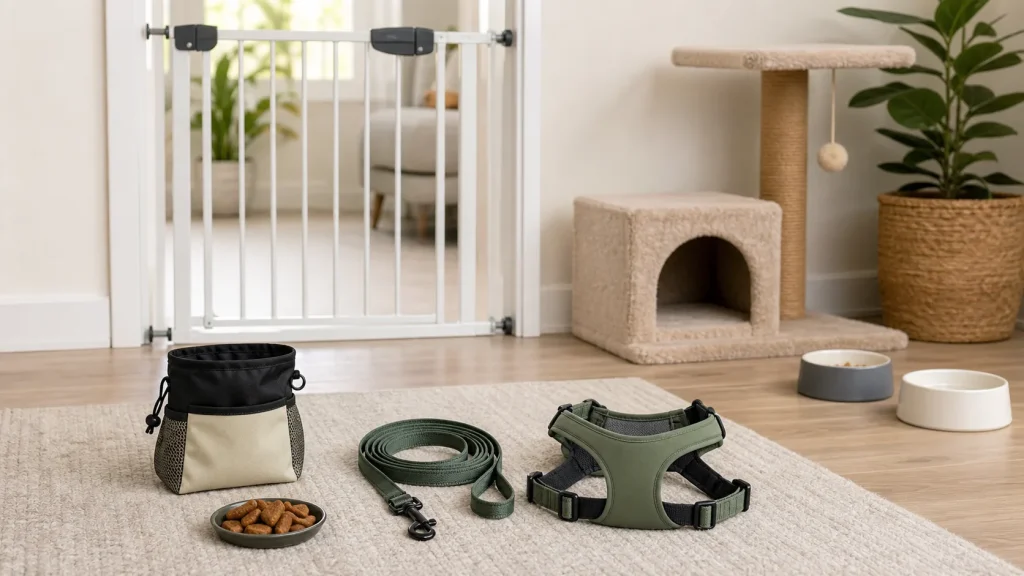
Dogs and cats communicate differently. A wagging dog may not feel friendly to a cat. A fleeing cat can trigger chasing in a dog. A dog who has never lived with cats may stare, stalk, whine, or lunge even if they are not trying to hurt anyone.
Safe introductions are less about a magical first meeting and more about management. Separation, scent, barriers, leashes, high perches, and controlled sessions give both animals time to learn.
As a reviewer, I see baby gates, leashes, cat trees, crates, and treat pouches as introduction tools. The best products create choice and safety; they do not force friendship.
The goal of this article is to give you a practical decision framework, not a pile of generic tips. A good pet guide should help you decide what matters first, what can wait, which products are actually useful, and when a veterinarian, trainer, groomer, or behavior professional should be involved.
Method 1: Start With Separation, Scent, and Safe Rooms
Before visual meetings, set up the environment so the cat has control and the dog cannot rehearse chasing.
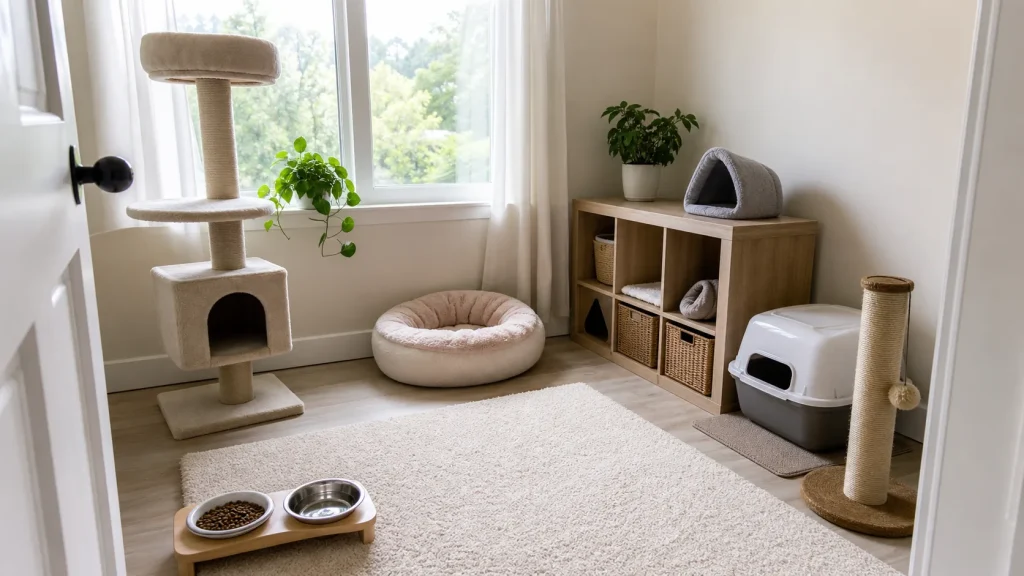
Step 1: Create a cat safe room
The room should include food, water, litter box, bedding, hiding spots, scratching, and a closed door. The cat needs a secure base.
Step 2: Let the new pet decompress
Keep pets separated for the first few days or until both are healthy, eating, and behaving normally.
Step 3: Swap scent gently
Exchange bedding or rub each animal with separate cloths and place the scent near good things like food or treats.
Step 4: Reward calm door behavior
Feed the dog for calmly noticing the closed door or baby gate area without barking, scratching, or fixating.
Step 5: Protect resources
Keep litter boxes, cat food, and resting areas where the dog cannot access them.
Step 6: Watch body language
Relaxed eating, grooming, and normal litter box use are better signs than forced closeness.
Do not rush the setup phase. Whether you are buying gear, changing food, grooming, introducing pets, or preparing for emergencies, the cleanest results usually come from smaller steps done consistently. Big jumps create stress and make it harder to know what actually helped.
Method 2: Use Controlled Visual Introductions
When both animals are calmer, add sight while keeping physical safety in place.
Step 1: Use a barrier first
Open the door with a baby gate, screen, or cracked-door setup. The cat should be able to leave.
Step 2: Keep the dog leashed
The leash prevents chasing and gives you a way to calmly increase distance if the dog fixates.
Step 3: Reward looking away
Mark and reward when the dog looks at the cat and then turns back to you. Calm disengagement is the goal.
Step 4: Keep sessions short
End after a few calm minutes. Long sessions often drift into fixation, stalking, or stress.
Step 5: Increase freedom slowly
Move from closed door to gate, from gate to leash in the room, and only later to supervised loose time.
Step 6: Interrupt chasing early
If the dog chases, reset the setup. Chasing is self-rewarding and frightening for the cat.
Real-life pet care is rarely perfect. Your job is to create a repeatable system that reduces risk and makes good choices easier. If a method depends on perfect timing, unlimited money, or a pet who never gets stressed, it probably needs to be simplified.
Tool Solution: Products That Are Actually Useful
Pet products should make care safer, cleaner, easier, or more consistent. I judge them by fit, durability, ease of cleaning, safety, value, and whether they support humane handling. A product that looks impressive but creates stress or confusion is not a good solution.
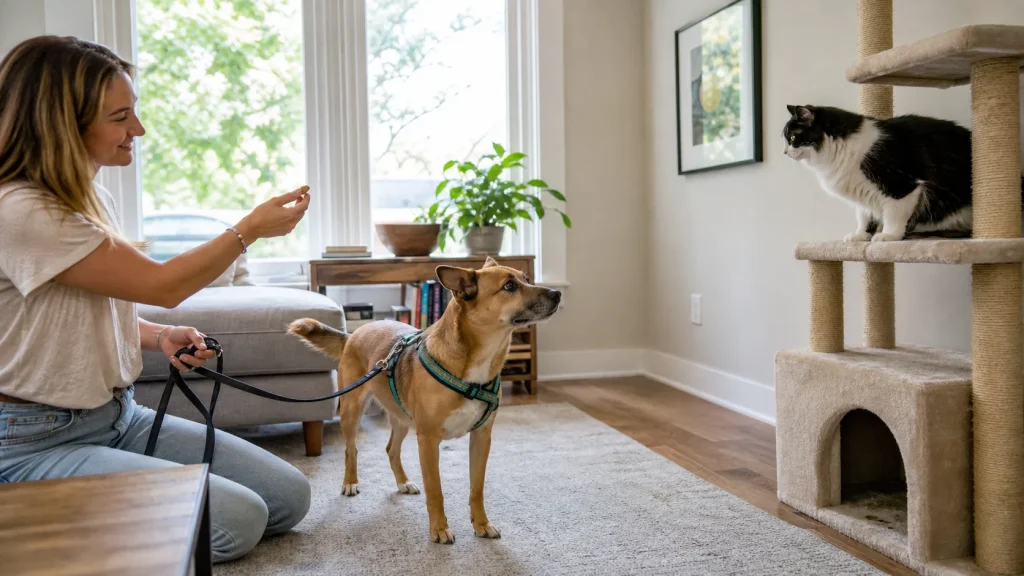
Baby gates or pet gates
Gates create visual access without full contact. Stacked gates or tall gates may be needed for athletic cats.
Cat tree or high shelves
Vertical space helps cats feel safe and gives them escape options.
Six-foot leash and harness
The dog should be controlled without neck pressure during early meetings.
Treat pouch
Fast rewards help you reinforce calm looking, turning away, and settling.
Door straps or screen barriers
These let pets smell and see each other with controlled access.
When comparing products, avoid buying only from a pretty photo. Check measurements, material, cleaning instructions, return policy, and whether the item matches your pet’s size, age, health, and behavior. The best choice is usually boring, durable, and easy to use correctly.
Common Mistakes
Putting the cat on the floor in front of the dog.
Letting the dog chase just once.
Removing barriers too early.
Ignoring cat stress signals.
Expecting friendship in a single day.
A final mistake is treating a guide as a one-time task. Pets change. Puppies grow, adult pets age, health shifts, seasons change, and household routines evolve. Review your setup regularly instead of assuming the first version will always be right.
How to Adjust This Guide for Different Pets
For high prey-drive dogs, move more slowly and get professional help.
For shy cats, extend the safe-room period.
For puppies, prevent playful chasing from becoming a habit.
For multiple dogs, introduce one dog at a time.
For small apartments, use vertical cat space and strict rotation.
If you have more than one pet, build the plan around the most vulnerable animal. A confident dog may handle change well, while a nervous cat, senior pet, puppy, or medically fragile animal may need slower steps and more management.
Expert Review Notes
After a decade of testing pet products, I have become cautious about anything marketed as a universal answer. Pets are not identical, and households are not identical. I look for tools and routines that are adjustable, understandable, and forgiving when real life gets messy.
The first review question is safety. Could the product pinch, trap, overheat, irritate skin, encourage overeating, create a choking risk, or make escape easier? If the answer is yes, the product needs more scrutiny no matter how popular it is.
The second review question is maintenance. A bowl that is hard to wash, a carrier nobody can lift, a shampoo that is difficult to rinse, or a kit that nobody updates will fail quietly. Pet care products have to survive daily use, not just look good on delivery day.
The third review question is whether the product fits the behavior you are trying to support. Good gear should make the right action easier. It should not replace supervision, veterinary care, training, or common sense.
Finally, I look at value over time. Cheap items that break quickly are not really cheap, and expensive items that do not solve a real problem are not really premium. The best pet guide purchases are the ones you use repeatedly because they make life smoother for both pet and owner.
Real-Life Scenarios
Scenario 1: The busy weekday owner. This owner needs a plan that works before work, after work, and when they are tired. The right solution should be easy to repeat, easy to clean, and simple enough that it does not fall apart on a rushed morning.
Scenario 2: The apartment household. Space is limited, storage matters, noise matters, and neighbors are close. Compact gear, quiet routines, and controlled access often matter more than large products or complicated setups.
Scenario 3: The multi-pet home. Shared spaces create extra pressure. Food, litter, crates, toys, carriers, gates, and emergency supplies may need labels or separation so one pet does not steal, guard, chase, or block another pet.
Scenario 4: The nervous pet. A fearful dog or cat may need slower steps, softer handling, more hiding options, and fewer surprises. In this case, the best product is often the one that gives the pet more choice and control.
Scenario 5: The family with children. Children need simple rules they can remember: let sleeping pets rest, do not take food or toys away, keep doors closed, and ask an adult before handling supplies. Pet products should support supervision, not replace it.
Buying and Setup Checklist
Before buying anything, define the job. Are you trying to improve safety, hygiene, nutrition, comfort, transport, training, or emergency readiness? Products are easier to compare when the job is clear.
Measure first. For dogs, measure neck, chest, length, height, and weight as needed. For cats, measure carrier space and room setup. Guessing sizes is one of the easiest ways to waste money.
Check cleaning requirements. Pet products touch food, skin, saliva, dirt, litter, fur, and outdoor surfaces. If it cannot be cleaned realistically in your home, it may not be the right item.
Read the warning labels and instructions. This sounds obvious, but many product problems come from using an item in a way the manufacturer did not design it for.
Start with one or two well-chosen products rather than a cart full of maybes. Test them, watch your pet’s response, and upgrade only when you know what is missing.
Budget, Mid-Range, and Premium Options
A budget setup should cover the non-negotiables first: safety, identification, hygiene, transport, and the basic product that does the job. Budget does not have to mean unsafe. It means avoiding decorative upgrades until the fundamentals are handled. Look for simple materials, standard sizing, washable surfaces, and clear return policies.
A mid-range setup is where most owners get the best value. This is the level where products often become easier to clean, more adjustable, more durable, or more comfortable. For many families, a mid-range choice is better than buying the cheapest version twice.
A premium setup can make sense when the item is used every day, when the pet has special needs, or when durability truly changes the cost over time. Premium is harder to justify for products your pet may outgrow, reject, chew, or only use occasionally.
My review rule is simple: spend more where failure creates stress or safety risk, and spend less where preference is still unknown. A carrier, leash, crate, food plan, or emergency kit may deserve more care than decorative accessories.
Also consider replacement cost. A washable mat, durable bowl, sturdy gate, or well-made storage container may save money because it survives cleaning and daily use. A fragile product with great photos can become expensive quickly if it fails in the first month.
When to Ask a Professional
Ask a veterinarian when the question involves health, diet, medications, skin, pain, digestion, sudden behavior change, or chronic symptoms. Product guides can help you shop, but they cannot diagnose a pet.
Ask a certified trainer or behavior consultant when fear, aggression, panic, chasing, escape, or unsafe handling is involved. Good professional help should make the plan clearer and safer, not more intimidating.
Ask a professional groomer when the coat is matted, the dog is difficult to handle, nails are overgrown, or bathing at home creates too much stress. Grooming is not just cosmetic; it can affect comfort and skin health.
Ask local emergency management, shelters, hotels, or boarding facilities about pet policies before a disaster or travel emergency. Written lists are better than memory when conditions are stressful.
If multiple professionals give conflicting advice, bring the conversation back to your pet’s individual needs. Age, medical history, temperament, environment, and household ability should shape the final plan.
Care Quality Check
Before you act on how to introduce a dog to a cat, check whether the plan is safe, realistic, and specific to your pet. A useful guide should lower confusion, not create a shopping list that ignores age, size, health, temperament, and household routine.
Start with the highest-risk part of the decision. For food, that may be life stage and calorie control. For bathing, it may be skin comfort and rinse quality. For introductions, it may be safe separation. For emergency kits, it may be current medication and carrier access. Handle the non-negotiables before decorative upgrades.
Look at your pet’s response, not just the product description. A carrier, bowl, shampoo, gate, crate, or checklist is only successful if the pet can use it safely and the household can maintain it. If the setup causes fear, rubbing, vomiting, slipping, guarding, escape attempts, or repeated avoidance, slow down and adjust.
Keep records where they help. Save food labels, vaccine records, medication names, microchip information, grooming notes, behavior logs, and product sizes when relevant. Good records make veterinary visits, travel, emergencies, and replacement purchases much easier.
Finally, review the setup after real use. The first version is rarely perfect. A good pet-care system becomes cleaner, safer, and easier to repeat after you see what your dog or cat actually does with it for a week.
Troubleshooting
If the plan is not working, reduce the difficulty before replacing every product. Many pet-care problems come from asking too much too fast: a full-house introduction, a sudden food switch, a long grooming session, or an emergency kit assembled during stress.
If your pet refuses, hides, scratches, barks, vomits, limps, stops eating, or shows pain, stop and reassess. Behavior is information. A pet who is struggling may need a slower setup, a different product, or veterinary support.
If family members are inconsistent, write the plan down. Simple shared rules reduce confusion: where supplies live, what the pet eats, who handles walks, when the kit is checked, or what steps happen before pets meet.
If the product seems wrong, identify the specific failure. Is it size, sound, texture, smell, cleaning, stability, access, or comfort? The more specific the problem, the better your replacement choice will be.
If you feel stuck, ask a qualified professional. A veterinarian, certified trainer, behavior consultant, groomer, or emergency management resource can save time and prevent avoidable mistakes.
Safety and Welfare Notes
This guide is educational and should not replace veterinary care. If your pet has pain, illness, skin problems, digestive symptoms, sudden behavior change, aggression, panic, or special medical needs, get professional advice.
Choose humane handling. Do not force a frightened pet through a process simply because a checklist says it is time. Slower steps are usually safer and more effective than pressure.
Watch for product wear. Cracked plastic, frayed leash material, damaged bowls, broken crate latches, expired food, and old medications can create risks. Inspect supplies regularly.
Keep human safety in the plan too. A stressed animal can scratch, bite, bolt, or panic. Use barriers, leashes, carriers, gloves, distance, and professional help when needed.
Put a review reminder on your calendar. Monthly checks work well for products used daily, while quarterly checks may be enough for stored supplies. Look at fit, cleanliness, expiration dates, broken parts, behavior changes, and whether the setup still matches your pet’s current life stage.
A Simple 7-Day Practical Plan
Day 1: Set up the cat safe room.
Day 2: Begin scent swapping.
Day 3: Reward calm behavior near the door.
Day 4: Try brief barrier viewing.
Day 5: Practice leashed dog check-ins near the gate.
Day 6: Repeat short calm sessions.
Day 7: Decide whether to continue barriers or step back.
Seven days is not a finish line. It is a starting structure. If your pet needs more time, repeat the easiest successful steps until the routine feels smooth.
FAQ
How long does it take for a cat to get used to a dog?
Some adjust in days, while others need weeks or months. The animals set the pace.
Should I let my dog sniff the cat?
Only when the cat can leave and the dog is calm. Do not force nose-to-nose greetings.
What if my dog chases my cat?
Stop free access and return to barriers, leash control, and professional guidance if needed.
Can dogs and cats become friends?
Yes, many can, but peaceful coexistence is also a success.
Should I hold the cat for introductions?
Usually no. A held cat may feel trapped and scratch to escape.
Do I need a baby gate?
A gate is one of the most useful tools because it allows gradual exposure with safety.
When should I get help?
Get help if the dog fixates, lunges, has a prey history, or the cat stops eating or using the litter box.

Key Takeaways
- Start with separation, not direct contact.
- Cats need safe rooms, escape routes, and vertical space.
- Dogs should be leashed during early visual introductions.
- Reward calm disengagement from the cat.
- Never allow chasing as practice.
- Move at the slower pet’s pace.
- Peaceful coexistence is a valid goal.