Quick Answer
To train a dog to come when called every time, start indoors with a clear recall cue such as “come,” reward immediately with high-value treats, and slowly increase distance and distractions. Never punish your dog after they come to you, even if they took too long. A reliable dog recall is built through repetition, timing, positive reinforcement, and controlled practice in real-life environments.
In my 10 years of reviewing pet training tools, I have seen the same pattern again and again: owners usually do not fail because their dog is stubborn. They fail because recall training becomes too difficult too quickly. The best method is simple: make coming to you the most rewarding choice your dog can make, then protect that cue until it is strong enough for the outside world.
Problem: Why Dogs Do Not Come When Called
When a dog ignores “come,” most owners assume the dog is being difficult. In reality, recall problems usually come from one of five causes: the cue has not been trained clearly, the reward is not valuable enough, the dog is distracted, the owner has accidentally punished the dog for coming back, or the cue has been repeated so often that it has lost meaning.
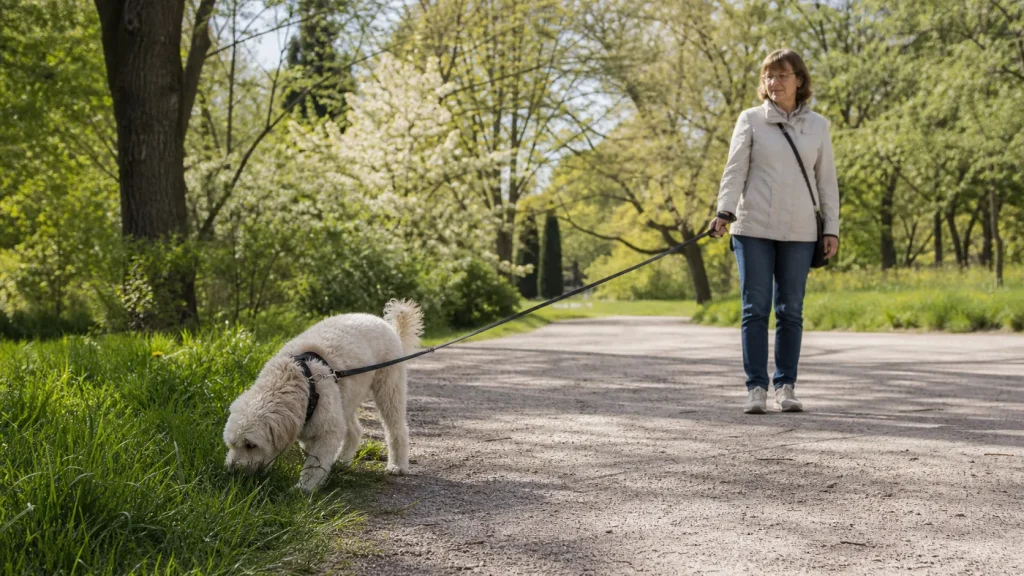
Think about the world from your dog’s point of view. Outside, there are squirrels, other dogs, food smells, moving people, traffic sounds, wet grass, and hundreds of scent trails you cannot even detect. If your dog is off leash at a park and you say “come,” you are competing against the environment. That is why dog recall training must begin in a boring place before it can work in an exciting place.
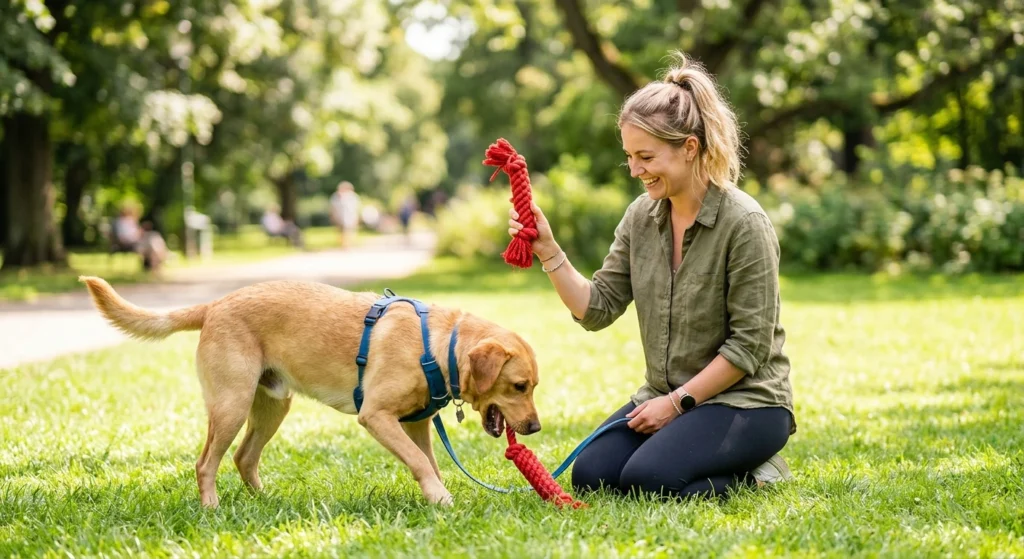
A reliable recall is not one command. It is a habit. Your dog needs to learn that the sound of your recall cue predicts something excellent: chicken, cheese, a favorite tug toy, praise, freedom to run again, or access to you. This is why positive reinforcement dog training is especially effective for recall. The dog is not coming because they fear the consequence. They are coming because coming back has become worth it.
For safety, recall should never be treated as a casual trick. A dog who comes when called can avoid traffic, wildlife, unsafe dogs, and dangerous objects. Even if you never plan to walk your dog off leash, recall is one of the most important obedience skills you can teach.
Method 1: Build a Strong Recall Cue Indoors
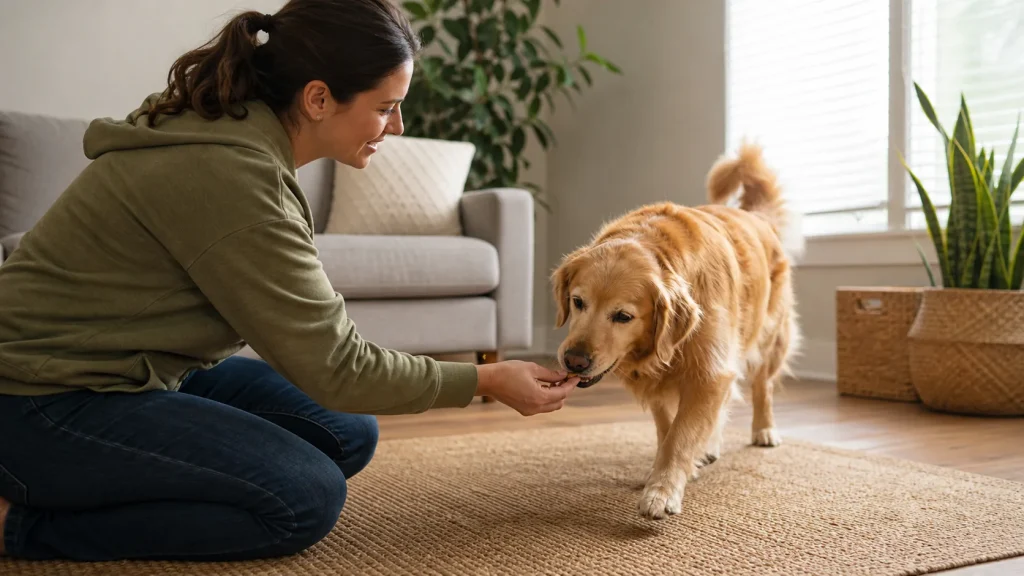
The easiest way to train a dog to come when called is to begin where success is almost guaranteed. That usually means your living room, hallway, kitchen, or backyard with no distractions. Your goal is not to test the dog. Your goal is to create a clean association between the recall word and a fast, happy return to you.
Step 1: Choose One Recall Cue
Pick one short cue and use it consistently. Common options include “come,” “here,” or “to me.” Do not use your dog’s name as the recall cue by itself. A name usually means “pay attention,” while a recall cue means “move toward me now.” If your current cue has been poisoned because you have repeated it too many times without results, choose a fresh cue.
Step 2: Prepare High-Value Rewards
For easy indoor sessions, regular treats may work. For stronger recall training, use high-value rewards: small pieces of cooked chicken, freeze-dried liver, cheese, soft training treats, or a toy your dog truly loves. The reward must be more interesting than the environment. A dry biscuit may not compete with a squirrel, but fresh chicken often can.
Step 3: Start Very Close
Stand only a few feet away from your dog. Say the cue once in a bright, inviting voice: “Come!” The moment your dog moves toward you, encourage them with happy praise. When they reach you, reward immediately. The timing matters. The reward should happen at your body, not halfway across the room, because you want your dog to understand that coming all the way in is the behavior that pays.
Step 4: Add Movement
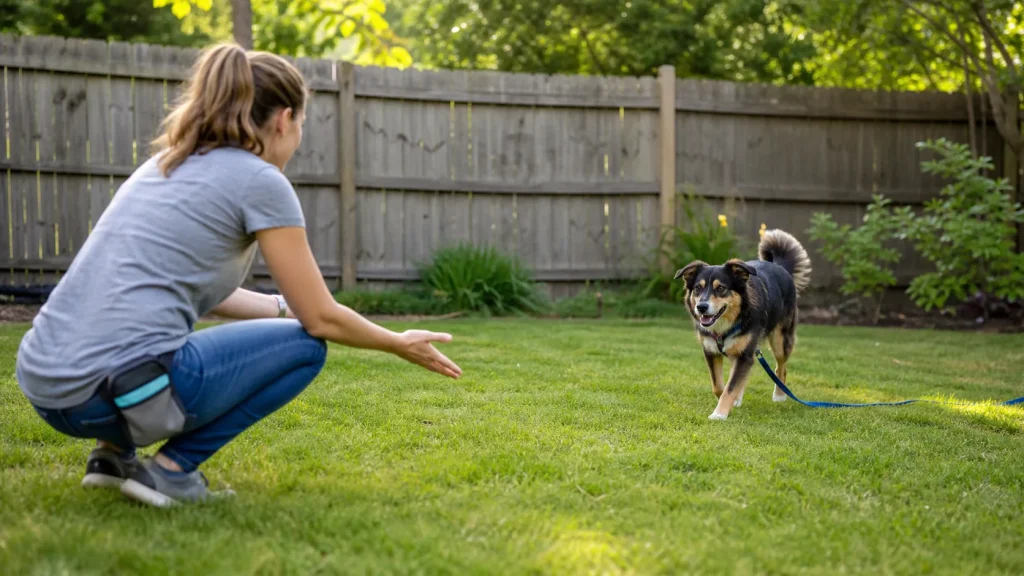
Dogs naturally chase movement. After you say the recall cue, take two or three quick steps backward. This makes you more exciting and helps the dog drive toward you. Avoid leaning over your dog or reaching too quickly for the collar at the beginning. Many dogs slow down if they think being grabbed is the end of fun.
Step 5: Practice Short Sessions
Do five to eight repetitions, then stop while your dog still wants more. Short sessions are better than long drills. If you practice recall until your dog is bored, the cue becomes less valuable. I prefer three mini-sessions per day over one long obedience session.
Step 6: Play Recall Games
Once your dog understands the basic cue, make it playful. Two family members can stand across a room and take turns calling the dog. Reward every successful return. You can also hide behind a doorway and call your dog once, then celebrate when they find you. These games turn puppy recall training into something social and exciting.
At this stage, do not call your dog for things they dislike. Do not say “come” and then immediately trim nails, end playtime, put them in the bath, or leave the dog park. If you need your dog for something unpleasant, calmly go get them. Protect the recall cue like it is expensive equipment, because in a real emergency, it is.
Method 2: Practice Recall With Real-World Distractions
Once your dog comes reliably indoors, you can move to controlled outdoor practice. This is where many owners make the mistake of removing the leash too early. A dog should not be expected to come when called off leash until they have practiced with distance, smells, sounds, and movement while still safely managed.
Step 1: Use a Long Training Leash
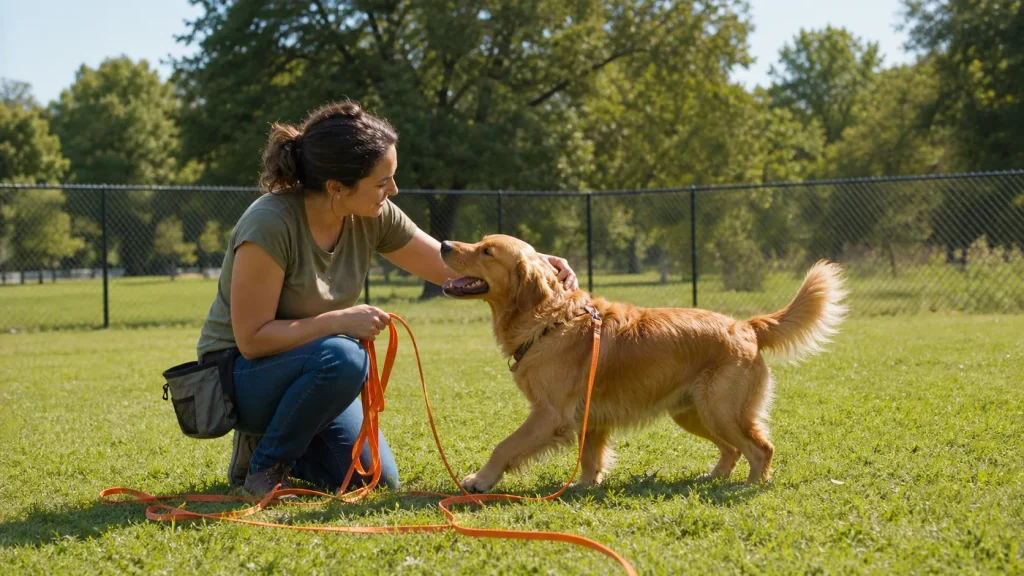
A 15- to 30-foot long line lets your dog explore while giving you a safety backup. Clip it to a well-fitted harness rather than a neck collar, especially for energetic dogs. Let your dog sniff, then say your recall cue once. If they turn toward you, praise and reward generously. If they do not respond, gently shorten the line without jerking, make yourself more interesting, and reduce the difficulty next time.
Step 2: Increase One Challenge at a Time
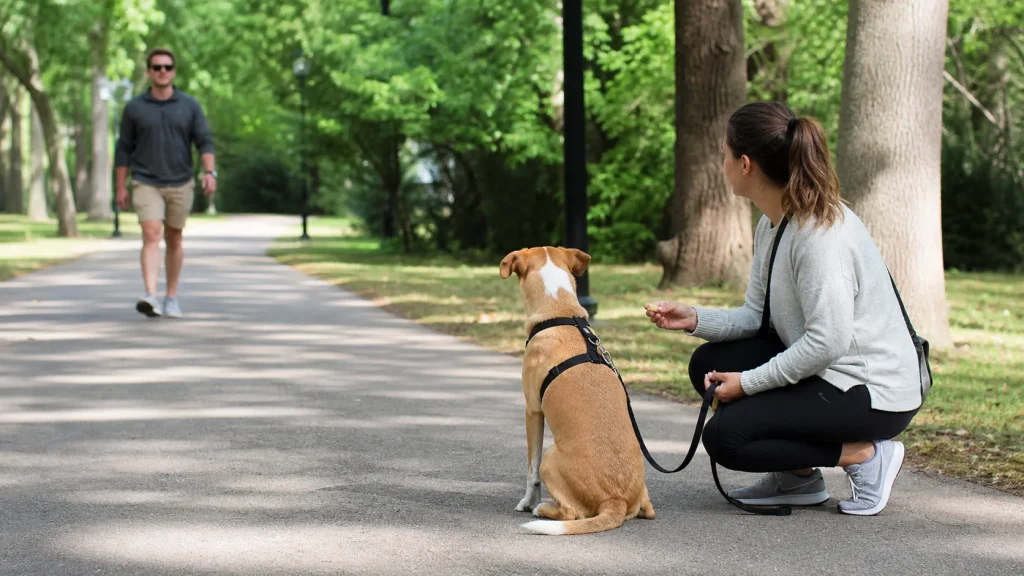
There are three major recall challenges: distance, distraction, and duration. Do not increase all three at once. If you move from your kitchen to a busy park, you have changed the entire training picture. Instead, try a quiet backyard, then an empty sidewalk, then a quiet park, then a park with people in the distance. Reliable off-leash recall is the final result, not the starting point.
Step 3: Reward Better Responses Better
Not every recall should pay the same. If your dog turns instantly away from another dog, give a jackpot reward: several treats, a short tug session, or enthusiastic praise. If your dog slowly wanders back from a low-distraction area, reward, but keep it modest. This helps your dog learn that fast recall around distractions is extremely valuable.
Step 4: Release Your Dog Back to Fun
One of the strongest rewards is permission to return to what they were doing. Call your dog, reward them, then say “go sniff” and let them explore again. This teaches that coming back does not always end freedom. For many dogs, especially adolescent dogs, this single habit can dramatically improve recall because the cue no longer predicts the end of the walk.
Step 5: Add Emergency Recall Training
An emergency recall is a special cue used only when you truly need your dog to return fast. Choose a unique word or whistle pattern. Practice it rarely, always with an extraordinary reward. For example, say the emergency cue indoors, then feed several pieces of chicken in a row. Later, practice in the yard, then in quiet outdoor spaces. Do not overuse this cue for routine moments.
Step 6: Proof the Cue Without Gambling
Proofing means practicing until the behavior works in many places. It does not mean taking unnecessary risks. Avoid off-leash practice near roads, unfenced areas, wildlife, livestock, or unfamiliar dogs. If you are not certain your dog will come back, use a long line. Good obedience training is not about proving control. It is about building reliability while protecting the dog.
Tool Solution: Gear That Makes Recall Training Easier
As a pet product reviewer, I am careful with training gear recommendations because no tool can replace good timing and consistent reinforcement. That said, the right equipment can make dog recall training safer and more efficient, especially for puppies, rescue dogs, and high-energy breeds.
Long Training Leash
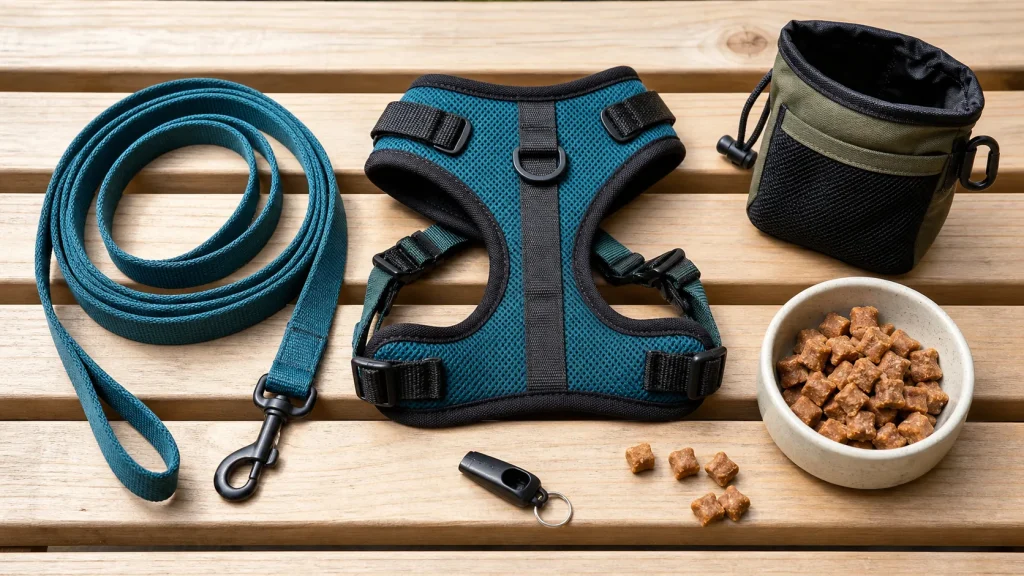
A long training leash is the first tool I recommend for recall. Look for a 15- to 30-foot line with a secure clip, visible color, and comfortable material. Biothane-style long lines are easy to clean and do not absorb as much water as cotton. Nylon is lighter and cheaper, but it can burn your hand if a dog runs hard, so gloves may help.
Front-Clip or Y-Shaped Harness
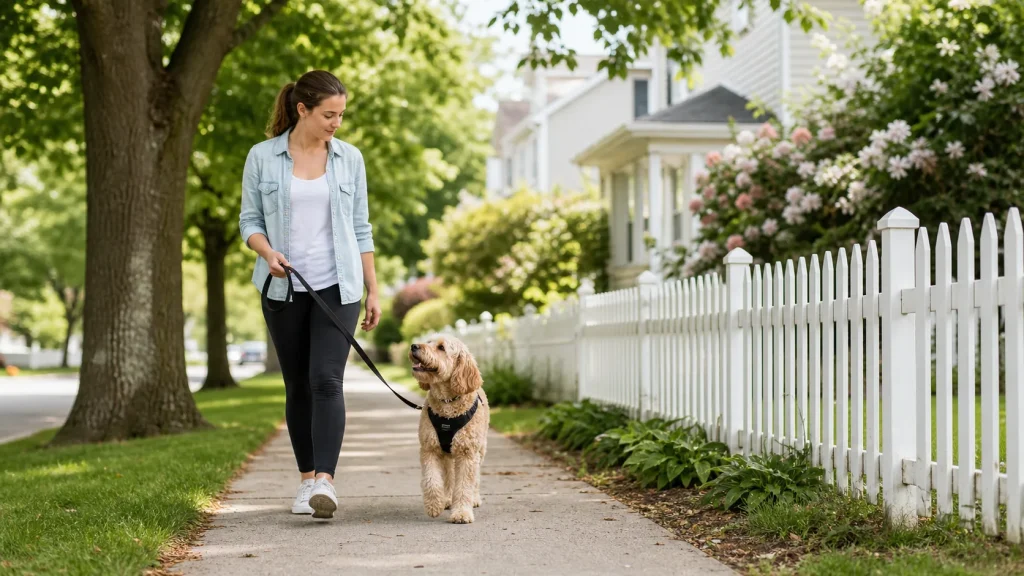
A well-fitted harness protects the neck and gives you safer control during outdoor recall practice. For long-line work, I prefer a Y-shaped harness that allows normal shoulder movement. Avoid poorly fitted harnesses that rub behind the front legs or restrict movement.
Treat Pouch
A treat pouch seems simple, but it changes training quality. If rewards are buried in your pocket, your timing becomes slow. A pouch lets you reward within one or two seconds, which is important for obedience training. Choose one that opens quietly, closes securely, and can hold both dry treats and a small bag of higher-value food.
Training Whistle
A whistle can be useful for emergency recall because it sounds consistent and carries farther than a human voice. It is not magic. You must condition the whistle the same way you condition a verbal cue: whistle, dog comes, excellent reward. For dogs who live with multiple family members, a whistle can reduce confusion because the sound stays the same no matter who uses it.
GPS Tracker for Extra Safety
A GPS tracker does not train recall, but it can add peace of mind for dogs who hike, travel, or spend time in large fenced areas. I treat GPS collars as backup safety tools, not permission to let an untrained dog roam. If you use one, check subscription cost, battery life, waterproof rating, and real-world signal reliability in your area.
The product lesson is straightforward: use tools that help your dog succeed, not tools that intimidate your dog into returning. A long line, harness, treats, and clear reward system are enough for most families. If your dog has a history of bolting, predatory chasing, severe fear, or aggression, work with a qualified positive-reinforcement trainer or veterinary behavior professional.
Common Recall Training Mistakes
The most common mistake is repeating the cue. If you say “come, come, come, come,” your dog may learn that the first few words do not matter. Say the cue once, then help the dog succeed by moving away, making an inviting sound, lowering distraction, or using the long line.
The second mistake is calling the dog only when fun is over. If “come” always means leaving the park, going inside, or stopping play, your dog will start avoiding you. Mix in many recalls where the reward is food, praise, and freedom to go back to sniffing.
The third mistake is punishing the dog when they finally return. Maybe the dog ignored you for two minutes, and you are frustrated. But if you scold the dog after they come back, the lesson may be “coming to my person is unsafe.” Reward the return, then make the next practice easier.
The fourth mistake is practicing off leash too soon. This is especially risky with adolescent dogs, rescue dogs, hounds, herding breeds, terriers, and dogs with high prey drive. Use management while the habit is still forming.
The fifth mistake is using low-value rewards in high-distraction environments. Your dog decides what is rewarding. If your treat cannot compete with the environment, upgrade the reward or lower the difficulty.
How to Adjust Recall Training for Different Dogs
Recall training should feel consistent, but it should not be identical for every dog. A young puppy, a newly adopted adult dog, a scent hound, and a reactive dog may all need different pacing. The core rule stays the same: set the dog up to succeed, reward generously, and avoid practicing in situations where failure is likely.
For puppies, keep sessions extremely short and cheerful. Puppy recall training works best when the puppy is already moving toward you, already curious about you, or already in a playful mood. Call once, reward fast, and end before the puppy gets tired. Puppies also go through developmental stages where confidence and focus change, so do not assume a good week means the skill is finished forever.
For adolescent dogs, expect inconsistency. Many dogs between roughly six months and two years old become more interested in the environment and less responsive to familiar cues. This is not a reason to give up. It is a reason to return to the long line, increase reward value, and practice in easier places again. Adolescent recall is often a maintenance project, not a one-time lesson.
For rescue dogs or newly adopted dogs, build trust before expecting off-leash reliability. A dog who does not yet understand your routines may panic, freeze, chase, or avoid being caught. Start indoors, use food rewards, and keep outdoor recall practice attached to a long leash or secure fenced area. The goal is to make your voice predictable and safe.
For scent-driven breeds and dogs with high prey drive, recall training needs stronger management. Beagles, coonhounds, huskies, terriers, and many sporting breeds may find smells or movement more rewarding than food in certain environments. These dogs can still learn a strong recall, but owners should be realistic about where off-leash freedom is safe. In unfenced areas, a long line may remain the best option.
For shy or sensitive dogs, avoid loud, frustrated, or sharp recall cues. Use a warm tone, turn your body sideways, crouch if it helps, and reward calmly. Some sensitive dogs move away when people bend over them or reach for the collar, so practice collar touches separately with treats. The recall should feel like an invitation, not a trap.
When to Get Professional Help
Most family dogs can make major recall progress with patient positive reinforcement training. Still, some situations deserve professional support. If your dog bolts through doors, chases cars, guards objects, reacts aggressively to dogs or people, or becomes too frightened to take food outdoors, a certified trainer or veterinary behavior professional can help you build a safer plan.
Professional help is also useful when the household is inconsistent. If one person rewards recall, another person scolds the dog, and a third person repeats the cue twenty times, the dog receives a confusing education. A good trainer can coach the humans as much as the dog. In my product testing work, I have learned that the best gear cannot fix unclear handling. The family system matters.
Look for trainers who use reward-based methods and can explain their plan clearly. Ask what happens when the dog gets it wrong. A thoughtful trainer should talk about distance, distraction level, management, reward value, and safety. Be cautious with any program that promises instant off-leash obedience or relies mainly on fear, pain, or intimidation. Reliable recall is built; it is not installed like software.
A Simple 7-Day Recall Training Plan
Day 1: Practice indoors from three to five feet away. Do three short sessions with high-value treats.
Day 2: Add movement. Say the cue once, step backward, reward when your dog reaches you.
Day 3: Play family recall games in different rooms. Keep the tone happy and the rewards generous.
Day 4: Practice in the backyard or a quiet hallway. Add mild distractions, such as a toy on the floor.
Day 5: Use a long line outdoors in a quiet space. Reward every successful recall.
Day 6: Add slightly harder distractions, such as another person at a distance or interesting smells.
Day 7: Test progress carefully. If your dog responds quickly eight out of ten times, continue increasing difficulty slowly. If not, return to easier practice for a few more days.
This plan is not a finish line. It is a foundation. Some dogs improve quickly in a week, while others need several months of steady recall training. Puppies, newly adopted dogs, and dogs with a long history of ignoring recall often need extra time. That is normal.
FAQ
How long does it take to train a dog to come when called?
Many dogs can learn the basic recall cue in a few days, but reliable recall around distractions usually takes weeks or months. The timeline depends on age, breed tendencies, reward history, environment, and consistency.
What is the best word for dog recall?
The best recall word is short, clear, and used consistently. “Come” and “here” are common choices. If your dog already ignores “come,” choose a new cue and rebuild the behavior from the beginning.
Should I use treats every time my dog comes?
In the early stages, yes. Reward every successful recall. Later, you can vary rewards, but difficult recalls should still pay well. For real-world obedience, reinforcement should not disappear completely.
Why does my dog come inside but ignore me outside?
Outside is harder. Smells, movement, people, dogs, and wildlife are powerful distractions. Practice outside on a long line and increase difficulty gradually.
Can I train recall without a leash?
Start indoors without a leash, but use a long line for outdoor practice until the behavior is reliable. Off-leash recall should be earned through safe repetition, not tested too early.
What should I do if my dog runs away when I call?
Do not chase unless safety requires it. Move away from your dog, crouch sideways, use a happy voice, or make yourself interesting. After the dog returns, reward them. Then go back to easier long-line training.
Are shock collars good for recall training?
I do not recommend shock collars as a first-line recall solution. For most family dogs, positive reinforcement, management, and professional coaching are safer and more humane. If a dog has serious behavior risks, consult a qualified professional.
Key Takeaways
- A reliable dog recall starts in a low-distraction environment and grows through gradual practice.
- Use one clear recall cue and avoid repeating it over and over.
- High-value rewards are essential when distractions are strong.
- Never punish a dog after they come to you, even if the response was slow.
- A long training leash makes outdoor recall practice safer and more effective.
- Letting your dog return to sniffing or playing can strengthen the recall cue.
- Emergency recall should use a special cue and exceptional rewards.
- Good tools support training, but they do not replace timing, consistency, and positive reinforcement.