If your puppy bites hands, shoes, furniture, blankets, and anything that moves, you are not alone. Puppies chew because they are teething, exploring, playing, and learning how to use their mouths.
The right chew toys will not magically train your puppy overnight, but they can make redirection much easier.
Disclosure: This article may contain affiliate links. If you buy through these links, we may earn a commission at no extra cost to you.
What Makes a Good Puppy Chew Toy?
A good puppy chew toy should be:
- Sized correctly for your puppy
- Durable enough for supervised chewing
- Soft enough for puppy teeth
- Easy to clean
- Interesting enough to redirect biting
- Free from small parts that break off easily
Always supervise new toys. If a toy cracks, tears, or becomes small enough to swallow, remove it.
Best Types of Chew Toys for Bitey Puppies
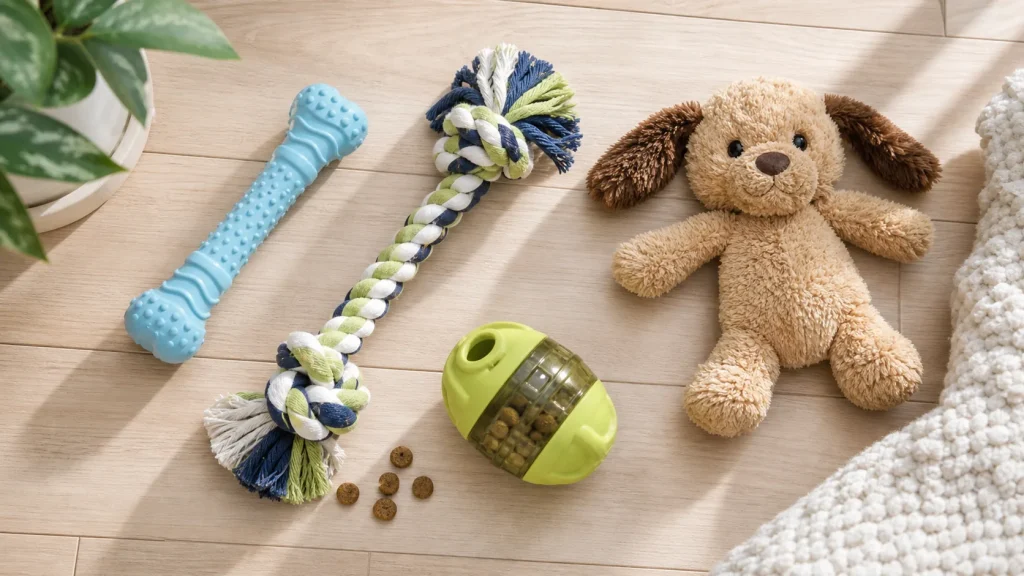
1. Soft Rubber Teething Toys
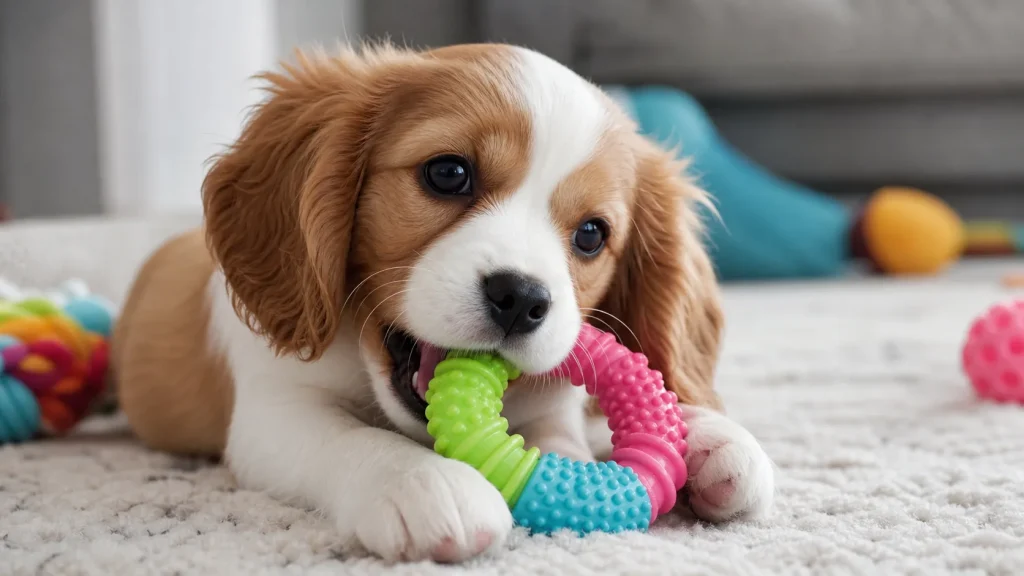
Soft rubber toys are helpful for puppies that are teething. They give your puppy a legal place to chew without being too hard on young teeth.
Best for:
- Teething puppies
- Puppies that bite hands
- Short redirection sessions
CTA placement:
See puppy-friendly chew options here: [REPLACE WITH APPROVED OFFER LINK]
2. Treat-Dispensing Toys
Treat-dispensing toys are useful because they make chewing mentally rewarding. Instead of only chewing from excitement, your puppy works for food or treats.
Best for:
- Bored puppies
- Puppies left alone for short periods
- Calm crate or pen time
Use treats that fit your puppy's diet and age.
3. Rope Toys for Supervised Tug
Rope toys can help teach your puppy what is okay to bite during play. The key word is supervised. Put the toy away when the game ends.
Best for:
- Redirecting hand biting
- Teaching drop it
- Short structured play
Do not let your puppy swallow rope fibers.
4. Plush Toys for Gentle Puppies
Some puppies love soft plush toys. They can be comforting and useful for carrying, but they may not last with heavy chewers.
Best for:
- Gentle chewers
- Crate comfort
- Puppies that like carrying toys
Avoid plush toys if your puppy immediately tears and swallows stuffing.
5. Puzzle Chew Toys
Puzzle-style toys can help puppies that bite because they are bored or overstimulated. These toys give your puppy a task.
Best for:
- Smart puppies
- High-energy dogs
- Indoor enrichment
How Many Chew Toys Does a Puppy Need?
You do not need a huge toy basket. Start with 4 to 6 useful options:
- One soft teething toy
- One treat-dispensing toy
- One tug toy
- One comfort toy
- One durable chew
- One backup toy for rotation
Toy rotation keeps old toys interesting.
How to Use Chew Toys to Stop Puppy Biting
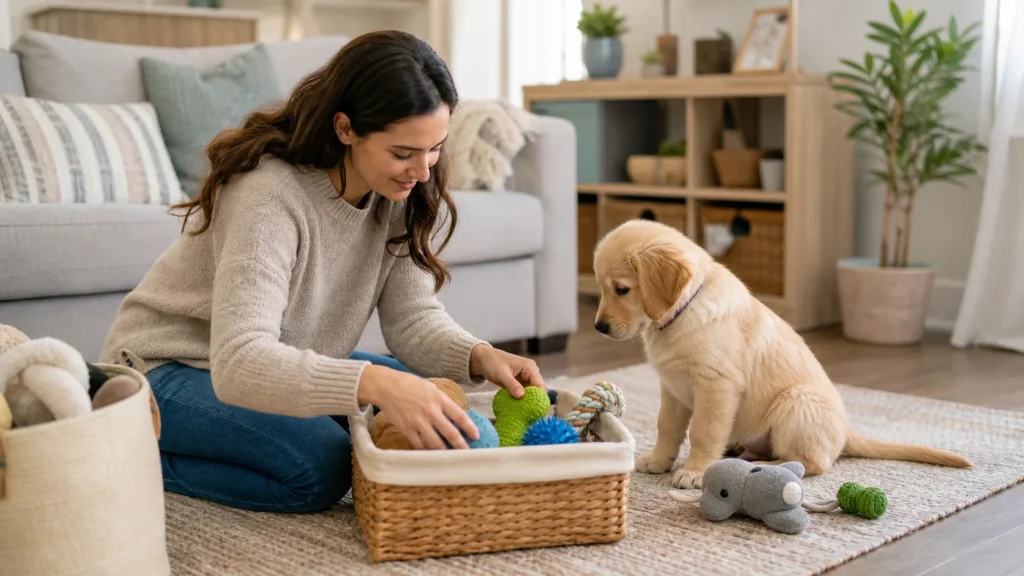
Chew toys work best when you use them as part of a routine:
- Keep toys near common biting areas
- Redirect before your puppy gets too excited
- Praise when your puppy takes the toy
- End play before biting gets rough
- Give a calm chew before naps
The toy is not just a product. It is a training tool.
Final Recommendation
For most bitey puppies, start with a mix of soft rubber, treat-dispensing, and supervised tug toys. If your puppy bites everything, variety matters because different chewing moods need different outlets.
Final CTA:
View our current recommended puppy chew toy picks here: [REPLACE WITH APPROVED OFFER LINK]