An anxious dog needs more than a cute bed. The right bed can support a calmer routine, but it works best when paired with training, predictable schedules, and a quiet resting area.
This guide explains what to look for before buying a bed for a nervous, clingy, or easily startled dog.
Disclosure: This article may contain affiliate links. If you buy through these links, we may earn a commission at no extra cost to you.
Can a Dog Bed Help Anxiety?
A bed cannot cure anxiety. But a comfortable, predictable rest spot can help some dogs settle more easily.
A good bed may support:
- Better nap routines
- A safer resting area
- Less pacing around the house
- A clear place cue
- Calmer crate or room transitions
If your dog has severe separation anxiety, panic, destructive behavior, or self-injury, work with a qualified trainer or veterinarian.
What to Look For in a Bed
1. A Cozy Shape
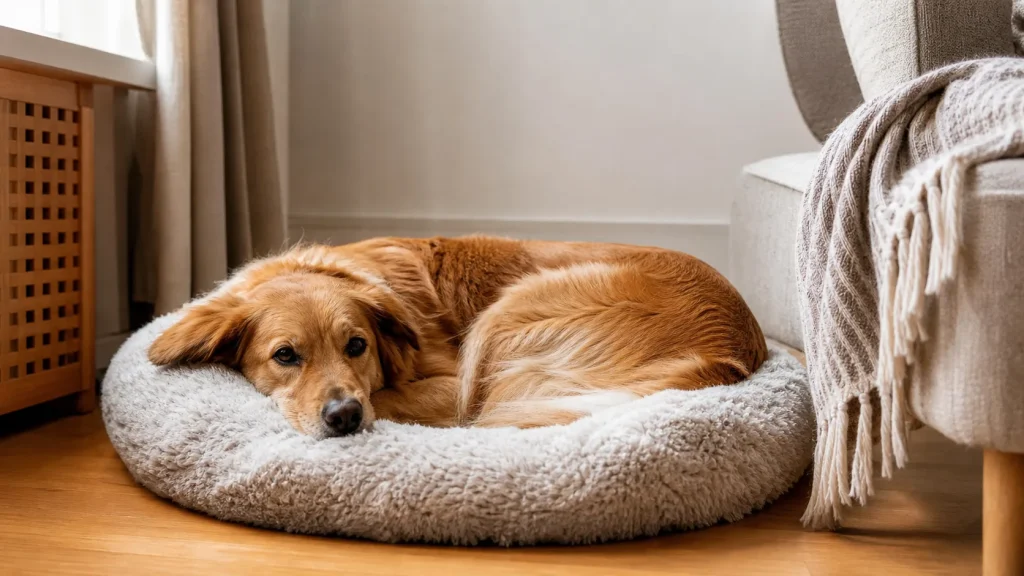
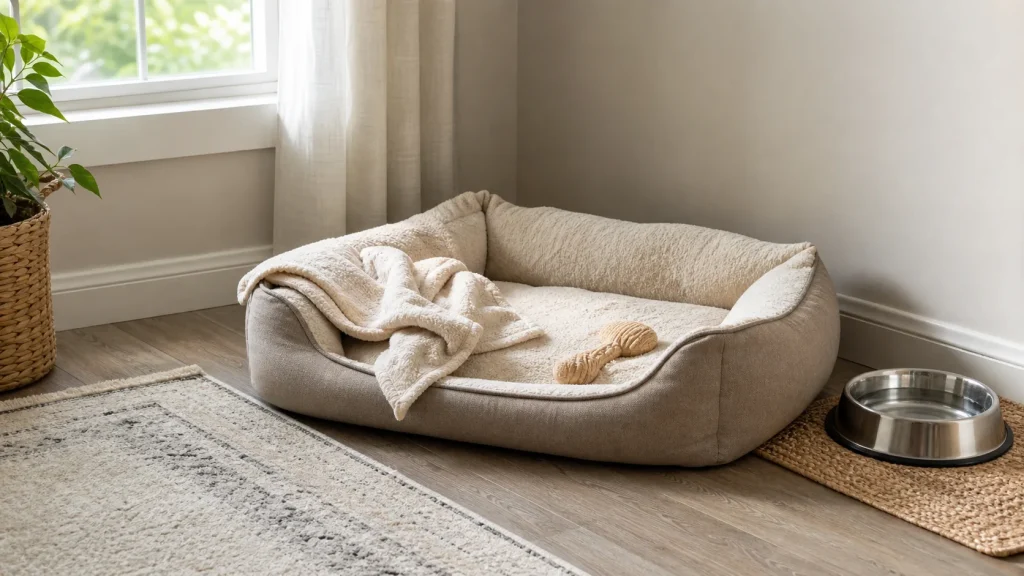
Many anxious dogs like beds with raised sides because they feel more enclosed. Donut beds, bolster beds, and nest-style beds can be comforting for dogs that like to curl up.
Best for:
- Dogs that curl tightly
- Dogs that like leaning against pillows
- Small to medium dogs that seek contact
2. Enough Support
Comfort matters, especially for older dogs or dogs that nap often. A flat, thin bed may not provide enough support.
Look for:
- Supportive padding
- Stable shape
- Size appropriate for stretching or curling
- Non-slip bottom if used on hard floors
3. Washable Covers
Dog beds get dirty. Choose something washable, especially for puppies, senior dogs, or dogs that spend a lot of time outside.
4. The Right Size
Measure your dog while resting. A bed should fit your dog's natural sleeping style. Some dogs want to curl; others want to sprawl.
5. Calm Placement
Even the best bed will not help much if it sits in a noisy traffic zone. Place the bed somewhere your dog can relax while still feeling connected to the household.
CTA placement:
See comfortable dog bed options for calmer rest routines here: [REPLACE WITH APPROVED OFFER LINK]
How to Teach Your Dog to Use the Bed
Make the bed rewarding:
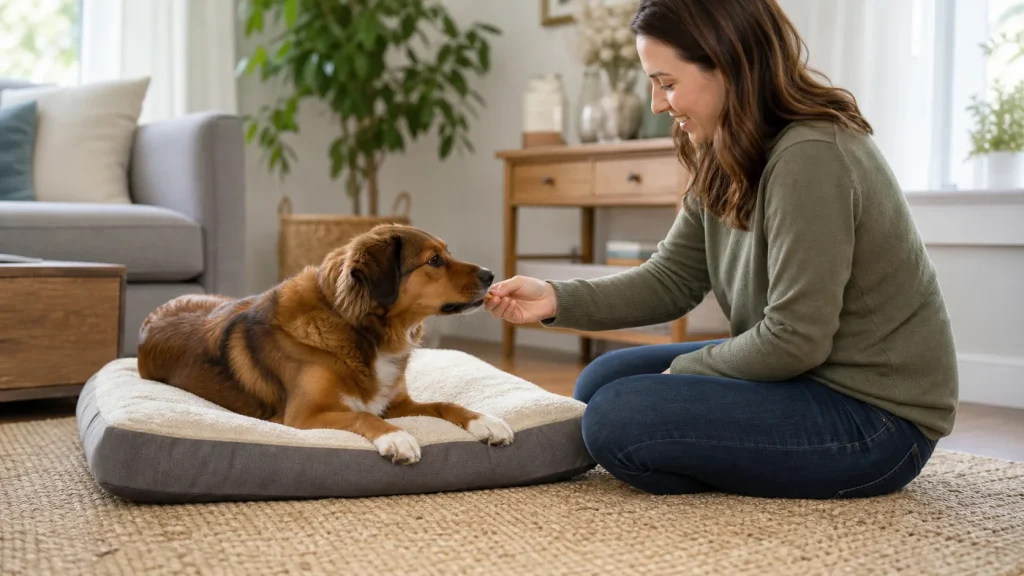
- Place treats on the bed
- Praise your dog for stepping onto it
- Add a cue like "place"
- Reward calm lying down
- Keep early sessions short
Do not drag or force your dog onto the bed. Let it become a positive place.
Final Thoughts
For anxious dogs, the best bed is comfortable, washable, supportive, and placed in a calm part of the home. It should be part of a larger routine that includes training, enrichment, and predictable rest.
Final CTA:
View our recommended cozy dog bed picks here: [REPLACE WITH APPROVED OFFER LINK]