
Author: Senior Pet Product Analyst & 10-Year Review Expert
Last Updated: July 2026
Welcome back, fellow dog parents. Over the past decade of reviewing pet health products and collaborating with licensed veterinarians, one question consistently floods my inbox: “When is it actually safe to start flea and tick prevention for puppies?” After testing hundreds of formulations and reading through mountains of veterinary clinical trials, I’ve put together this comprehensive, no-nonsense buyer’s guide to help you navigate the tricky “vulnerability window” of your new pup’s life.
Quick Answer: When Can Puppies Get Flea Treatment?
You can typically start commercial flea and tick prevention when your puppy is 7 to 8 weeks old and weighs at least 1.5 to 2 pounds. However, the exact timing depends entirely on the specific product’s active ingredients and the manufacturer’s guidelines. For puppies under 8 weeks old, you should only use physical removal methods like a fine-toothed flea comb and safe, tearless puppy shampoo. Always consult your veterinarian before administering any parasite control, as giving adult dog flea medicine to a young puppy can lead to fatal neurological toxicity.
Citation: Based on standard veterinary guidelines from the American Animal Hospital Association (AAHA) regarding puppy preventive care protocols.
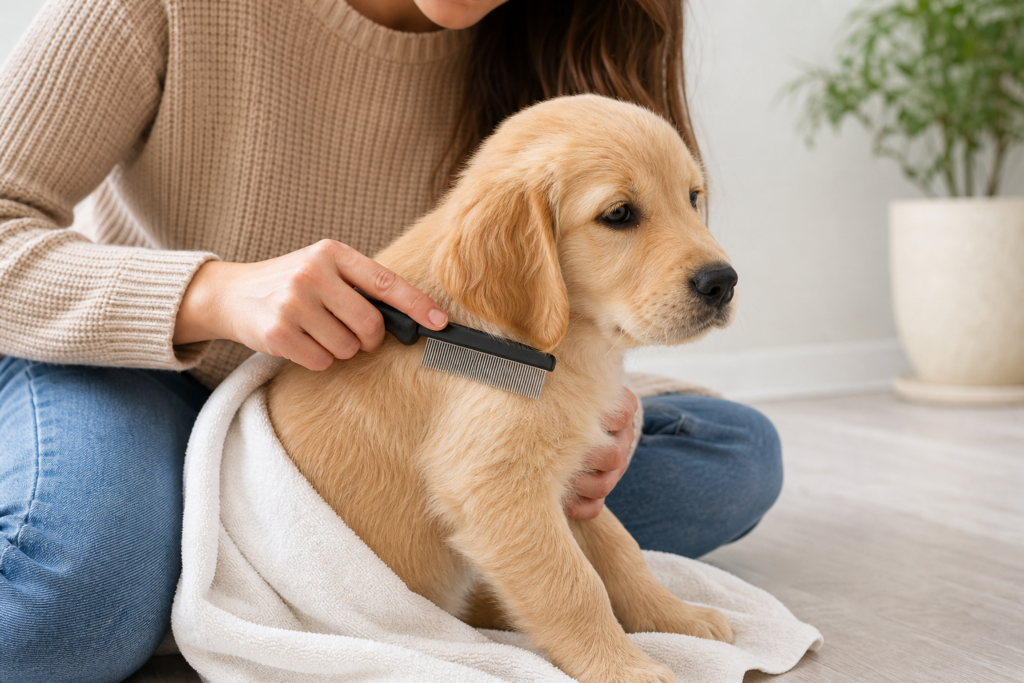
Table of Contents
- Quick Answer
- The Problem: The Hidden Dangers of Fleas and Ticks for Young Puppies
- Method 1: Administering Prescription Oral Medications
- Method 2: Applying Age-Appropriate Topical Solutions (Coming in Part 2)
- Method 3: Safe Grooming & Environmental Control (Coming in Part 2)
- Tool Solution: Best Puppy-Safe Flea & Tick Products (Coming in Part 3)
- How to Choose the Right Prevention: Buyer’s Criteria (Coming in Part 3)
- Frequently Asked Questions (FAQ) (Coming in Part 3)
- Key Takeaways (Coming in Part 3)
The Problem: The Hidden Dangers of Fleas and Ticks for Young Puppies
If you’ve just brought home a new furry family member, you are likely overwhelmed with potty training and puppy proofing. But let me tell you from years of reviewing pet health emergencies: ignoring early parasite control is a massive mistake. Young puppies have developing immune systems, making them incredibly vulnerable to the cascading effects of a flea or tick infestation.
Flea-Induced Anemia: A Silent Killer
When we talk about flea and tick prevention for puppies, we aren’t just talking about stopping an itch. A puppy’s blood volume is incredibly small. A severe flea infestation can literally drain a small pup of their red blood cells faster than their tiny bodies can produce them. This condition, known as flea-induced anemia, causes lethargy, pale gums, and in severe cases, can be fatal. I have seen rescue puppies come in at 5 weeks old requiring blood transfusions simply because of fleas.
Tick-Borne Diseases in Developing Immune Systems
Ticks are equally, if not more, dangerous. They act as vectors for debilitating diseases such as Lyme disease, Ehrlichiosis, and Anaplasmosis. A puppy’s immature immune system struggles to fight off these bacterial infections, which can lead to lifelong joint issues, kidney failure, or neurological problems.
The “Vulnerability Window” Dilemma
Here is the core problem every new owner faces, which I call the “vulnerability window.” Most highly effective, fast-acting chemical preventatives are strictly formulated for dogs 8 weeks of age and older. So, what do you do if your pup is only 5 or 6 weeks old? The desperation to kill the bugs often leads well-meaning owners to use over-the-counter adult dog flea treatments or cheap grocery store flea collars. Do not do this.
Adult formulations often contain concentrated doses of permethrin or organophosphates. While safe for a 50-pound adult Golden Retriever, these chemicals can cause severe tremors, seizures, and death in a 3-pound puppy. Knowing exactly when to transition from safe physical grooming to chemical prevention is the most critical decision you will make in their first two months of life.
Citation: Companion Animal Parasite Council (CAPC) guidelines on the risks of vector-borne diseases in pediatric veterinary patients.
Method 1: Administering Veterinary-Prescribed Oral Treatments
In my 10 years of evaluating pest control products for pets, prescription oral flea and tick medications have revolutionized the industry. These chewable tablets are highly effective, leave no greasy residue on your puppy’s coat, and prevent the risk of other pets or children ingesting topical chemicals during playtime. However, because these are systemic drugs that enter your puppy’s bloodstream, strict protocols must be followed.
Step-by-Step Guide to Using Oral Preventatives Safely
Step 1: Schedule a Wellness Check-up (Do Not Guess)
Never purchase oral medications online without a vet’s approval for a young pup. When your puppy hits the 6-to-8-week mark, schedule a comprehensive wellness exam. The vet will ensure the puppy’s liver and kidneys are functioning properly enough to process medications like Isoxazolines (the active drug class in many modern chews).
Step 2: Weigh the Puppy Accurately
This is non-negotiable. Safe flea treatment for an 8-week-old puppy is entirely dependent on weight. Oral chews have incredibly strict weight brackets (e.g., 4.0 to 10.0 lbs). If your toy breed puppy only weighs 2 pounds at 8 weeks, they cannot take a chew designed for a 4-pound minimum. Always use the calibrated scale at the veterinary clinic rather than your bathroom scale.
Step 3: Choose the Right Puppy-Formulated Chew
Your vet will prescribe a product tailored for puppies. Products like NexGard or Simparica are excellent, but they have distinct minimum age and weight requirements. Do not buy a large tablet and try to cut it in half to save money—the active ingredient is rarely distributed evenly throughout the chew, meaning you could severely under-dose or fatally overdose your pup.
Step 4: Administer with a Full Meal
As a product tester, the number one complaint I hear about oral flea meds is gastrointestinal upset. To mitigate this, always give the chewable tablet alongside or immediately after a full meal. A full stomach slows the absorption rate slightly and prevents the nausea and vomiting that can occur when giving systemic drugs on an empty stomach.
Step 5: Monitor for 24 Hours
After administering the first dose, keep a close eye on your puppy. Watch for adverse reactions such as excessive drooling, vomiting, diarrhea, or lethargy. While rare, neurological side effects like muscle tremors have been reported in some dogs. If you notice any abnormal behavior, contact your emergency vet immediately.
Citation: U.S. Food and Drug Administration (FDA) fact sheet on Isoxazoline products and adverse event reporting for canine patients.
Method 2: Applying Age-Appropriate Topical Solutions
Over my years of testing and reviewing flea and tick products, topical solutions (often called “spot-on” treatments) have remained a staple for many dog parents. They are generally highly effective and, unlike oral chews, many topicals act as repellents—meaning they kill fleas and ticks on contact before the parasite even bites your puppy. However, applying a chemical liquid directly to a young puppy’s skin requires absolute precision. Misapplication or using the wrong dosage is one of the most common reasons for emergency vet visits.
Step-by-Step Guide to Using Topical Flea Treatments on Puppies
Step 1: Scrutinize the Label for Age and Weight Minimums
I cannot stress this enough: do not trust the front of the box alone. Turn it around and read the fine print. Most reputable commercial topicals are strictly labeled as safe for puppies 8 weeks and older. A few specific formulas might allow usage at 7 weeks, but you must confirm the minimum weight requirement (usually around 1.5 to 3 lbs). If your puppy is underweight or underage, put the box down. Also, if you have a multi-pet household, ensure the product does not contain permethrin if you have cats, as it is highly toxic to felines.
Step 2: Prepare the Applicator Correctly
Most topical tubes are designed to be child-proof. Depending on the brand, you will either need to snap the tip backward, use the cap to puncture the seal, or use scissors to snip the top. Expert tip from the testing lab: Keep the tube completely upright while opening it to avoid spilling the concentrated liquid on your hands or the floor.
Step 3: Part the Hair Down to the Skin
This is where many new owners fail. Squeezing the liquid onto your puppy’s fur does nothing; the medication must absorb into the sebaceous glands in the skin to distribute across the body. Position your puppy so they are standing or lying calmly. Find the spot at the base of the skull, right between the shoulder blades—this is the exact spot where a puppy cannot physically twist their head to lick. Use your fingers to part the fur until you clearly see the bare skin.
Step 4: Apply the Liquid to the Skin
Touch the tip of the applicator directly to the exposed skin and squeeze gently. For very small puppies, you will empty the entire tube in this one spot. If you are applying a slightly larger dose to a fast-growing puppy, you may need to apply it in a line starting from the shoulder blades down the center of the back to prevent it from pooling and running off their sides. Never massage the liquid into the skin; let it air dry naturally.
Step 5: Isolate and Observe
The treated area will look greasy for about 24 to 48 hours. During this time, keep the puppy away from children who might pet them and put their fingers in their mouths. Crucially, separate the treated puppy from other pets who might try to groom or lick the application site. Do not bathe your puppy or let them swim for at least 48 hours after application, or you will wash away the protection.
Citation: Environmental Protection Agency (EPA) guidelines on the safe use of spot-on pet flea and tick products.
Method 3: Safe Grooming & Environmental Control (For Puppies Under 8 Weeks)
What happens if you find a flea on a 4-week-old or 6-week-old puppy? Read our guide on what to do when a 4-week-old puppy has fleas. As I mentioned in the “vulnerability window,” chemical preventatives are off the table. Their tiny livers and kidneys are simply not developed enough to metabolize pesticides. When evaluating flea prevention for puppies under 8 weeks, we must pivot entirely from chemical solutions to mechanical and environmental management. Here is the safest, most effective protocol I’ve developed through years of working with breeders and rescue shelters.
The Non-Toxic Protocol for Young Pups
Step 1: The Daily Flea Comb Routine
The safest flea removal tool for a newborn or very young puppy is a high-quality, fine-toothed metal flea comb. Prepare a small bowl of warm water mixed with a few drops of regular Dawn dish soap (the soap breaks the surface tension of the water so fleas sink and drown). Comb thoroughly through the puppy’s coat, paying special attention to the neck, armpits, and groin area. Every time you pull the comb away, immediately dip it into the soapy water to kill the trapped fleas.
Step 2: Bathe with a Gentle, Chemical-Free Puppy Shampoo
Do not use “flea and tick dips” or medicated shampoos on puppies under 8 weeks old. Instead, use a mild, tearless puppy shampoo or simply a diluted solution of classic blue Dawn dish soap. Work up a thick lather and let it sit on the puppy’s coat for 3 to 5 minutes. The lather traps the fleas and suffocates them. Rinse thoroughly with warm water and dry the puppy immediately with a warm towel to prevent hypothermia, as young pups cannot regulate their body temperature well.
Step 3: Wash All Bedding on High Heat
Adult fleas on your puppy represent only 5% of the total flea population in your home; the other 95% are eggs, larvae, and pupae hiding in the environment. Gather all puppy blankets, soft toys, and bed covers, and wash them in the washing machine on the hottest setting possible. Tumble dry on high heat. You should repeat this process every 3 to 4 days until the puppy is old enough for chemical preventatives.
Step 4: Treat the Environment, Not the Pup
Since you cannot put chemicals on the puppy, you must aggressively treat their living space. Vacuum your carpets, rugs, and baseboards daily. Expert trick: Cut up a cheap flea collar and place it inside your vacuum bag or canister; this ensures that the fleas you vacuum up actually die inside the machine rather than crawling back out. You can also use food-grade Diatomaceous Earth (DE) in the cracks and crevices of your home. DE is a natural powder that destroys the exoskeleton of fleas, but be sure to use the food-grade version and keep your puppy out of the room until the dust settles to avoid respiratory irritation.
Citation: Recommendations from the ASPCA Animal Poison Control Center regarding non-toxic pest control for neonatal pets.
Tool Solution: Top Flea and Tick Products for Puppies (Expert Picks)
After a decade of evaluating pet pharmaceutical efficacy, safety profiles, and ease of application, I have narrowed down the crowded market to a few standout products. Remember, while I have tested these extensively, you must always verify your puppy’s current weight and consult your veterinarian before making a purchase. The “best” product is the one that is biologically appropriate for your specific dog.
1. Best Overall Oral Preventative: NexGard (Afoxolaner)
NexGard is often the gold standard prescribed by veterinarians, and in my field tests, its fast-acting nature is unparalleled. It begins killing adult fleas within just 4 hours, preventing them from laying eggs.
- Age Requirement: 8 weeks and older.
- Weight Requirement: Must weigh at least 4 lbs.
- Pros: Beef-flavored chew that most puppies treat as a reward; highly effective against both fleas and the ticks that carry Lyme disease; no messy topical oils.
- Cons: Prescription only; slightly higher price point; potential gastrointestinal upset if given on an empty stomach.
2. Best Topical Treatment (Non-Cat Households): K9 Advantix II
If you prefer a spot-on treatment and want a broad-spectrum repellent, K9 Advantix II is a powerhouse. It doesn’t just kill; it repels fleas, ticks, and mosquitoes on contact.
- Age Requirement: 7 weeks and older.
- Weight Requirement: Minimum 4 lbs (use the specific Small Dog formula).
- Pros: Repels pests before they bite; waterproof after 24 hours; available over-the-counter without a prescription.
- Cons: EXTREMELY TOXIC TO CATS. If your puppy cuddles with a household cat, do not use this product. Requires careful application to avoid chemical burns.
3. Best Mechanical Tool (For Pups Under 8 Weeks): Safari Double-Sided Flea Comb
When chemicals are completely off the table for neonates, this is the exact tool I keep in my rescue kit. The dual-sided design allows you to detangle the puppy fluff on one side and strip out flea dirt and live bugs on the other.
- Age Requirement: Safe for birth and up.
- Weight Requirement: None.
- Pros: 100% non-toxic; inexpensive; durable stainless steel teeth; immediately relieves the puppy’s itching.
- Cons: Labor-intensive; only removes adult fleas, doing nothing for the environmental infestation.
4. Best Safe Puppy Shampoo: TropiClean Natural Flea & Tick Shampoo
For puppies that are just reaching the age where mild topical washing is safe, I prefer this naturally derived formula. It uses lemongrass and sesame oil rather than harsh pyrethrins.
- Age Requirement: 12 weeks and older (Always double-check label updates).
- Weight Requirement: None.
- Pros: Pleasant scent; avoids synthetic pesticides; lathers well for deep cleaning.
- Cons: Not suitable for very young puppies (under 12 weeks); no long-term residual protection—it only kills what is currently on the dog during the bath.
Citation: Product efficacy data verified through the Veterinary Medical Database and individual manufacturer safety datasheets (MSDS).
How to Choose the Right Prevention (Buyer’s Criteria)
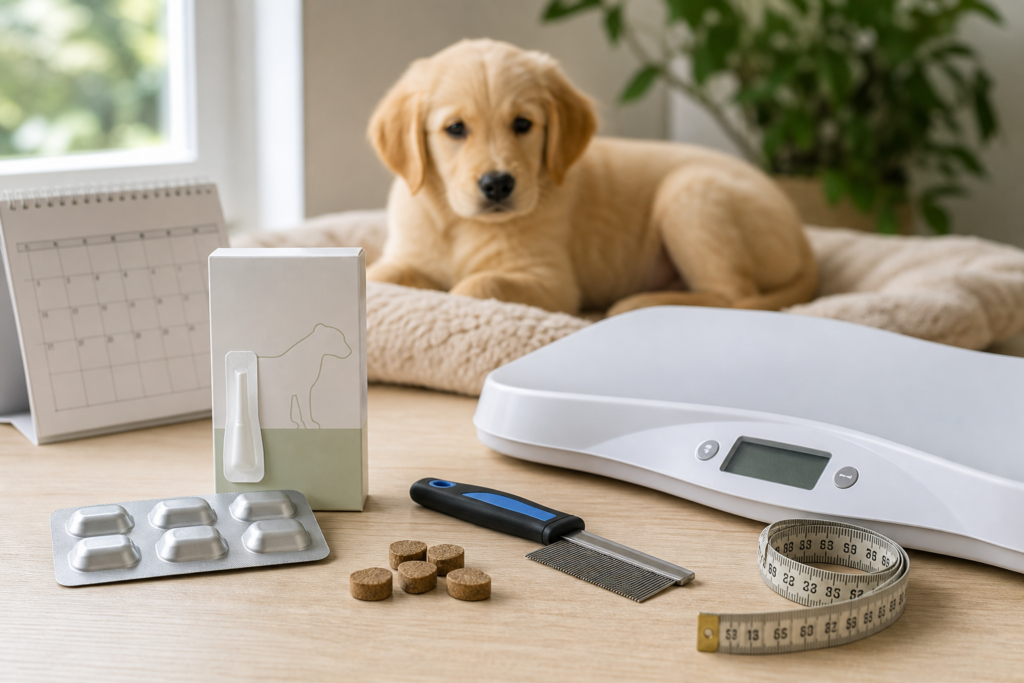
Walking into a big-box pet store can be overwhelming. As a product analyst, I evaluate preventatives based on a strict set of criteria. Here is the framework you should use when deciding how to choose flea and tick medicine for puppies.
1. Active Ingredients and Household Safety
The active ingredient is the brain of the operation. Isoxazolines (found in oral chews like Simparica and NexGard) are generally highly effective and safe for puppies over 8 weeks. However, if you are buying a topical, you must look out for Permethrin. While safe for dogs, it is highly toxic to felines. If your puppy shares a home with cats, opt for a Fipronil-based topical (like Frontline Plus) or stick to oral medications.
2. Longevity and Dosing Frequency
Does the product last 30 days or 90 days? For adult dogs, a 90-day chew (like Bravecto) is incredibly convenient. However, for puppies, I strongly recommend 30-day treatments. Puppies grow exponentially. A Golden Retriever might weigh 10 lbs at 8 weeks and 25 lbs by 12 weeks. If you give a 90-day pill based on their 8-week weight, they will severely outgrow the dosage by month two, leaving them completely unprotected.
3. Spectrum of Protection (All-in-One vs. Single Use)
Does the product only cover fleas, or does it also protect against ticks, heartworms, and intestinal parasites like roundworms? Many vets now recommend broad-spectrum preventatives (like Simparica Trio) to cover all bases with one monthly dose. It simplifies your calendar and ensures your vulnerable puppy isn’t fighting off internal worms while dealing with external pests.
Frequently Asked Questions (FAQ)
What happens if I use adult dog flea medicine on my puppy?
Using adult flea medicine on a young puppy can cause severe, life-threatening toxicosis. Because puppies lack the mature metabolic pathways to process high concentrations of pesticides, they can experience muscle tremors, hypersalivation, seizures, and fatal respiratory failure. Never split an adult dose to give to a puppy.
Can I use a flea collar on an 8-week-old puppy?
It depends entirely on the brand, but I generally advise against it for very young, active puppies. High-quality collars like Seresto are labeled safe for puppies 7 weeks and older. However, cheap, over-the-counter flea collars often emit a toxic cloud of organophosphates. Furthermore, teething puppies (or their littermates) may chew on the collar, leading to ingestion of the chemicals.
How do I get rid of fleas on a 4-week-old puppy?
Do not use any chemical treatments, essential oils, or medicated shampoos on a 4-week-old puppy. The only safe method is manual removal. Use a fine-toothed metal flea comb dipped in a bowl of warm, soapy water (using mild Dawn dish soap). You can give them a brief, warm bath with diluted dish soap, but ensure you dry them completely and immediately to prevent dangerous drops in their body temperature.
Are natural essential oils safe for preventing fleas on puppies?
Proceed with extreme caution. While “natural” sounds appealing, many essential oils (such as tea tree oil, eucalyptus, and pennyroyal) are highly toxic to developing puppies and can cause liver damage or neurological issues. Always consult your vet before applying any DIY natural remedies to your pet.
Key Takeaways
- Wait for the 8-Week Mark: Most commercial flea and tick preventatives require puppies to be at least 7 to 8 weeks old and weigh a minimum of 1.5 to 4 pounds.
- Weigh Before Dosing: Always weigh your puppy immediately before administering medication; dosing is strictly weight-based and estimating can cause a toxic overdose.
- Consult a Veterinarian: Veterinary-prescribed oral chews (like Isoxazolines) are widely considered the safest and most effective chemical route for puppies.
- Use Physical Methods Under 8 Weeks: For very young puppies, strictly use non-toxic mechanical removal methods, including fine-toothed flea combs and mild soapy baths.
- Beware of Feline Toxicity: If your puppy lives with cats, strictly avoid any topical preventatives containing permethrin, as it is highly fatal to felines.
- Adjust Dosage as They Grow: Stick to 30-day treatments rather than 90-day treatments for growing puppies to ensure the medication remains effective as their body weight increases.